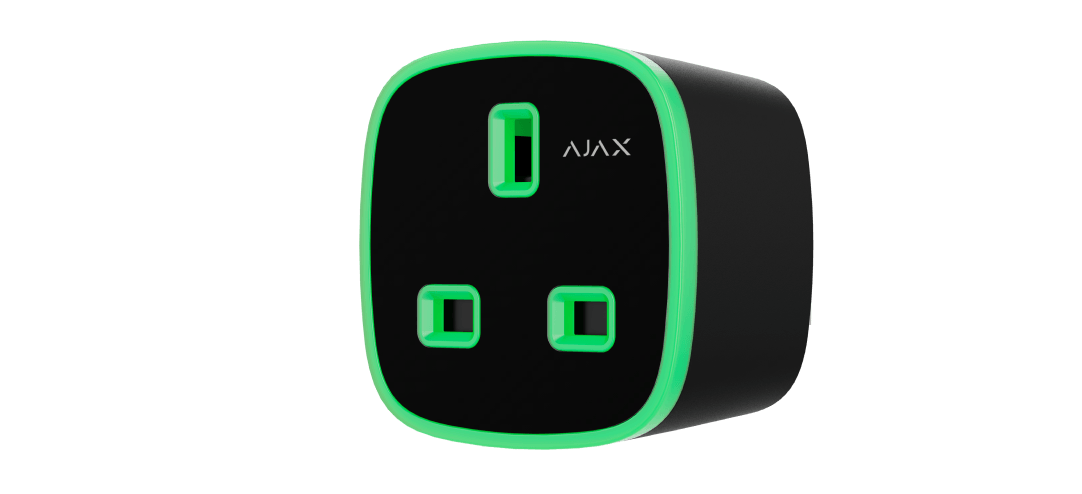
Socket (type G) Jeweller
Review the electrical and regional requirements before selecting another plug type.
MAKE IT YOURS
Smart plug with power consumption monitoring
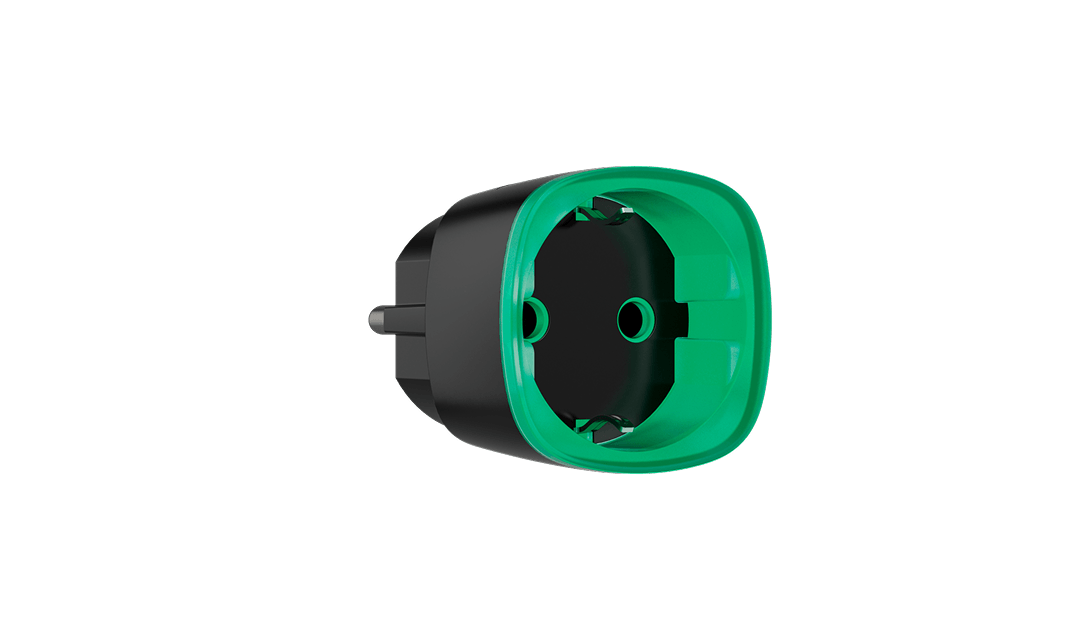
Socket (type F) Jeweller adds remote switching and consumption monitoring at a plug socket. You can manage the connected appliance through the Ajax app and include it in configured scenarios. It is a simple way to add control to suitable plug-in equipment, within the device’s electrical rating.
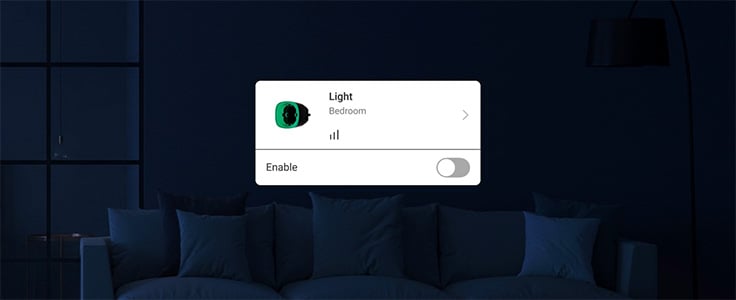
Switch a suitable connected appliance remotely.
Up to 2.5 kW resistive at 230 V AC.
Current, voltage, power and accumulated energy.
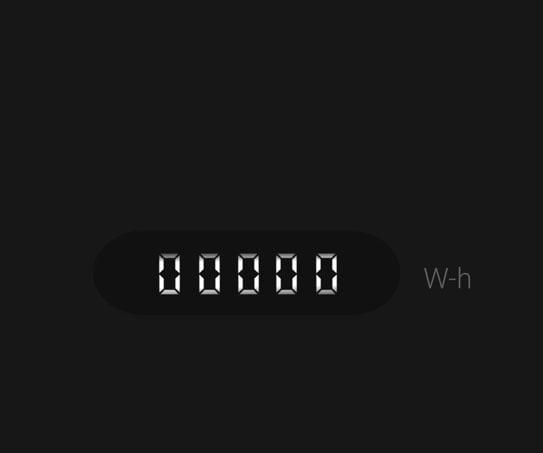
Review accumulated consumption before disconnecting the plug.
Colours show the connected load; brightness is configurable.
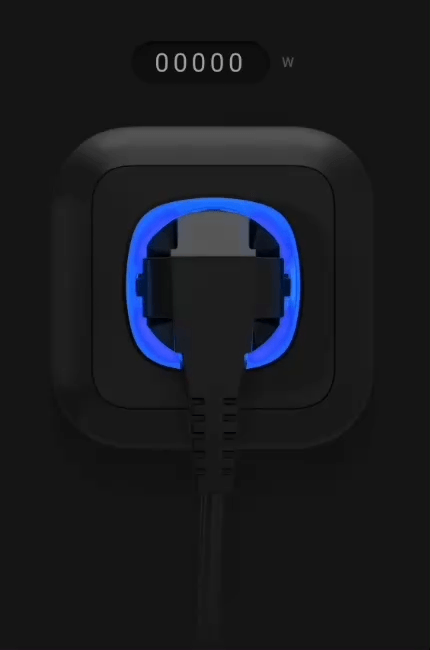
Choose pulse or bistable operation.
Use supported schedules, system events and control devices.
Configure the normal contact state for the appliance.
Guarded contacts for a proper matching plug.
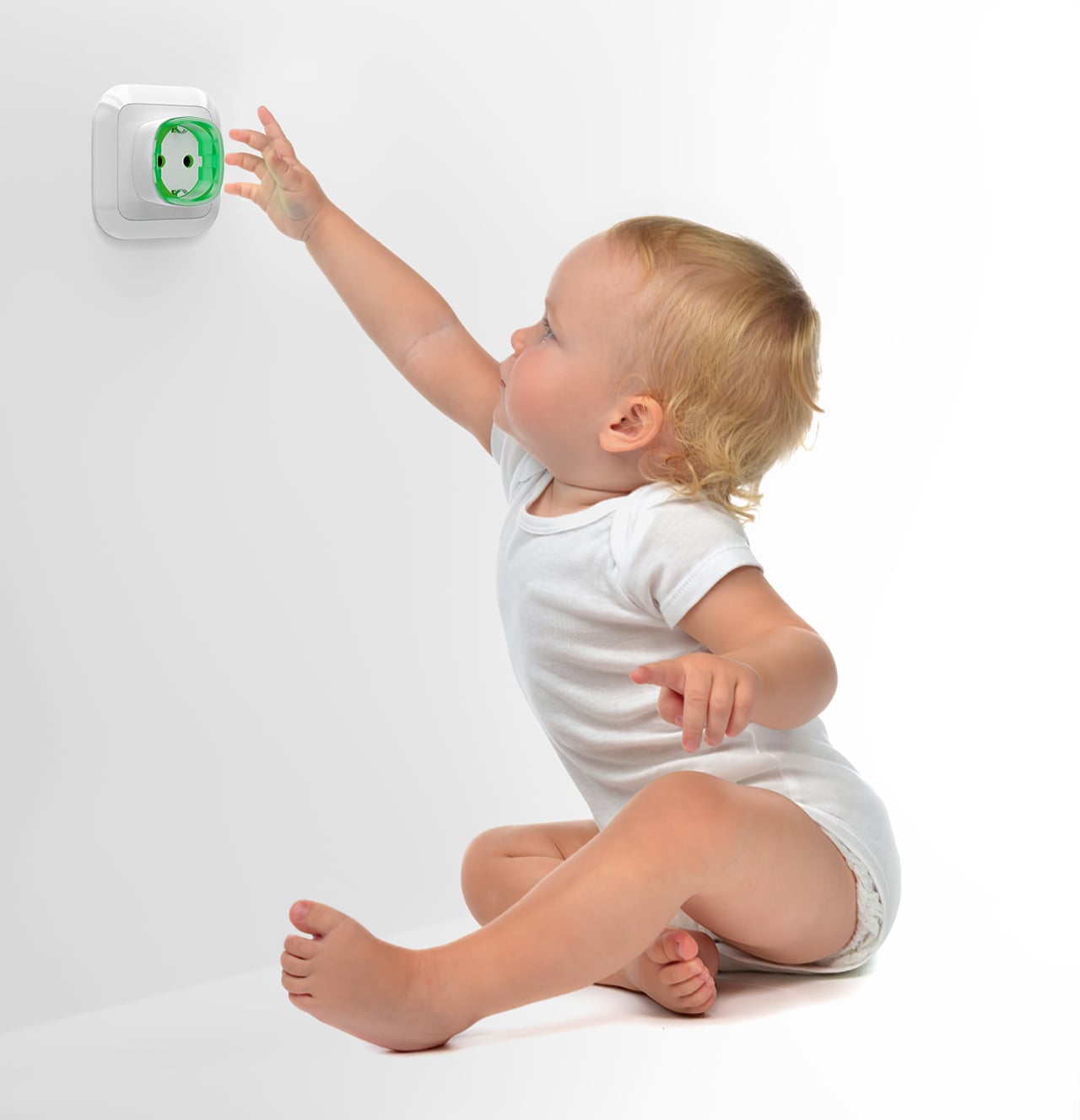
Overcurrent, abnormal supply voltage and overheating.
Encrypted communication through a compatible Ajax hub.
Open-space communication range; test the final outlet.
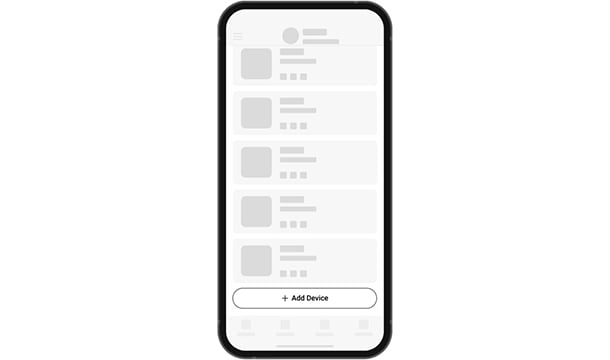
Name the plug and assign its room.
Complete plug-in device for a matching outlet.
Ajax product information ↗ · Socket (type F) Jeweller specifications ↗
Socket adds remote switching to a suitable connected appliance. Use the Ajax app to check its state and turn the power on or off through a compatible hub.
Type F is controlled through the app or supported system commands. It has no Type G/Type B control button; pairing follows its own power-up procedure.
View the connected load’s readings in the Ajax app. Updates follow the configured device polling interval, so the displayed values are not a continuous laboratory measurement.
Type F’s energy counter resets when the plug loses power. Its manual also warns that current and power readings at loads up to 25 W may be inaccurate.
The LED frame changes colour as the connected appliance’s load changes. Adjust its brightness or indication behaviour in the Ajax app.
Indicator colours describe the current load; they do not increase the continuous rating. The specified standby consumption is up to 1 W.
Bistable mode holds the selected state. Pulse mode changes the contact state for 1–255 seconds and then returns. Set normally open or normally closed behaviour to match the appliance.
Type F requires firmware 5.54.1.0 or later for pulse mode and selectable contact state. Earlier devices are bistable with normally open contacts; the specification identifies devices manufactured after 4 March 2020.
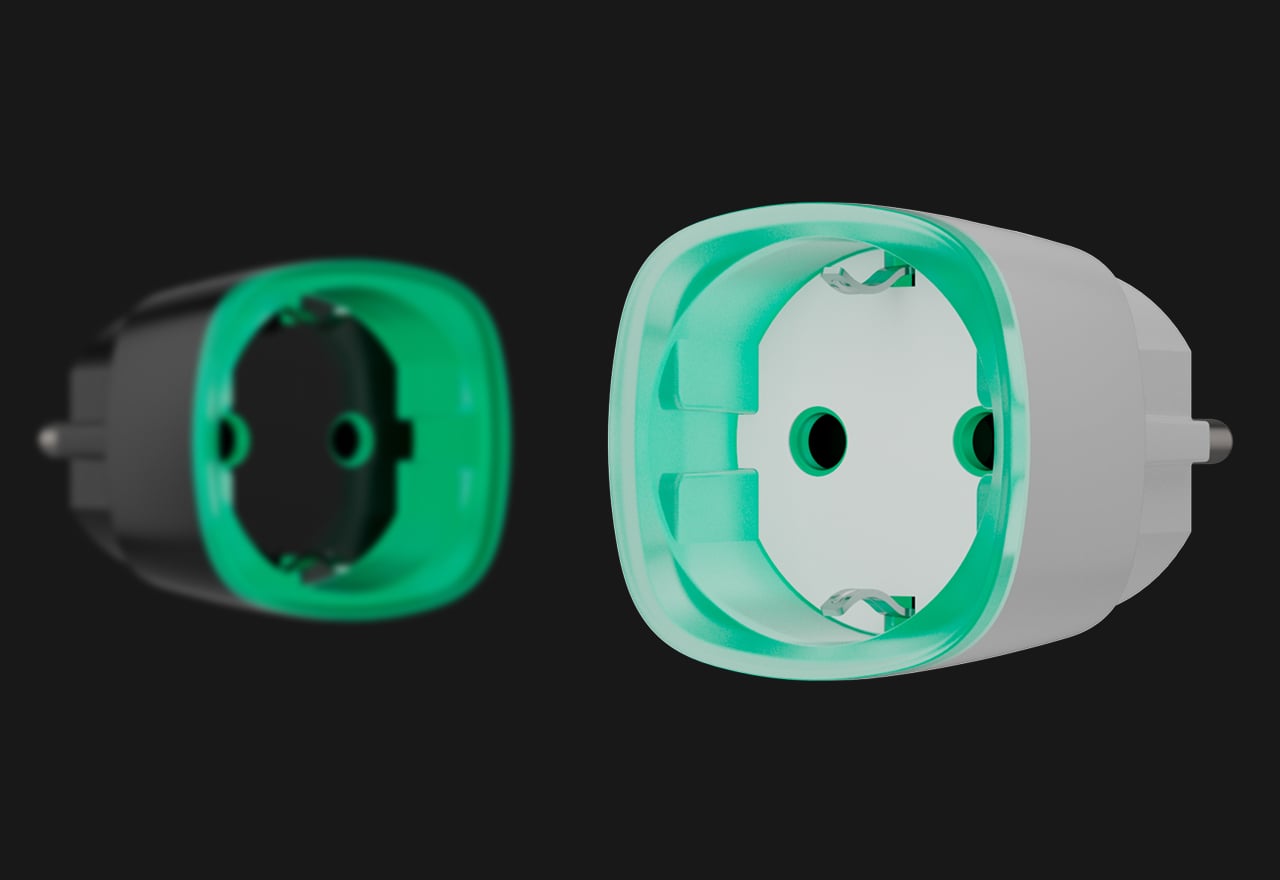
Type F supports 110–230 V AC at 50/60 Hz: up to 2.5 kW resistive load at 230 V or 1.2 kW at 110 V. Inductive or capacitive loads have an 8 A limit at 230 V.
Current, voltage and temperature protection can disconnect the load. Protection thresholds are separate from the 11 A continuous rating. Verify the exact firmware and supply-voltage protection settings against the specification.
Internal shutters obstruct access to live contacts when no proper plug is inserted. The socket retains a grounding contact for suitable connected equipment.
For indoor, dry use only: IP20, 0–40 °C and up to 75% humidity. Shutters do not make the device waterproof or replace the installation’s electrical protection.
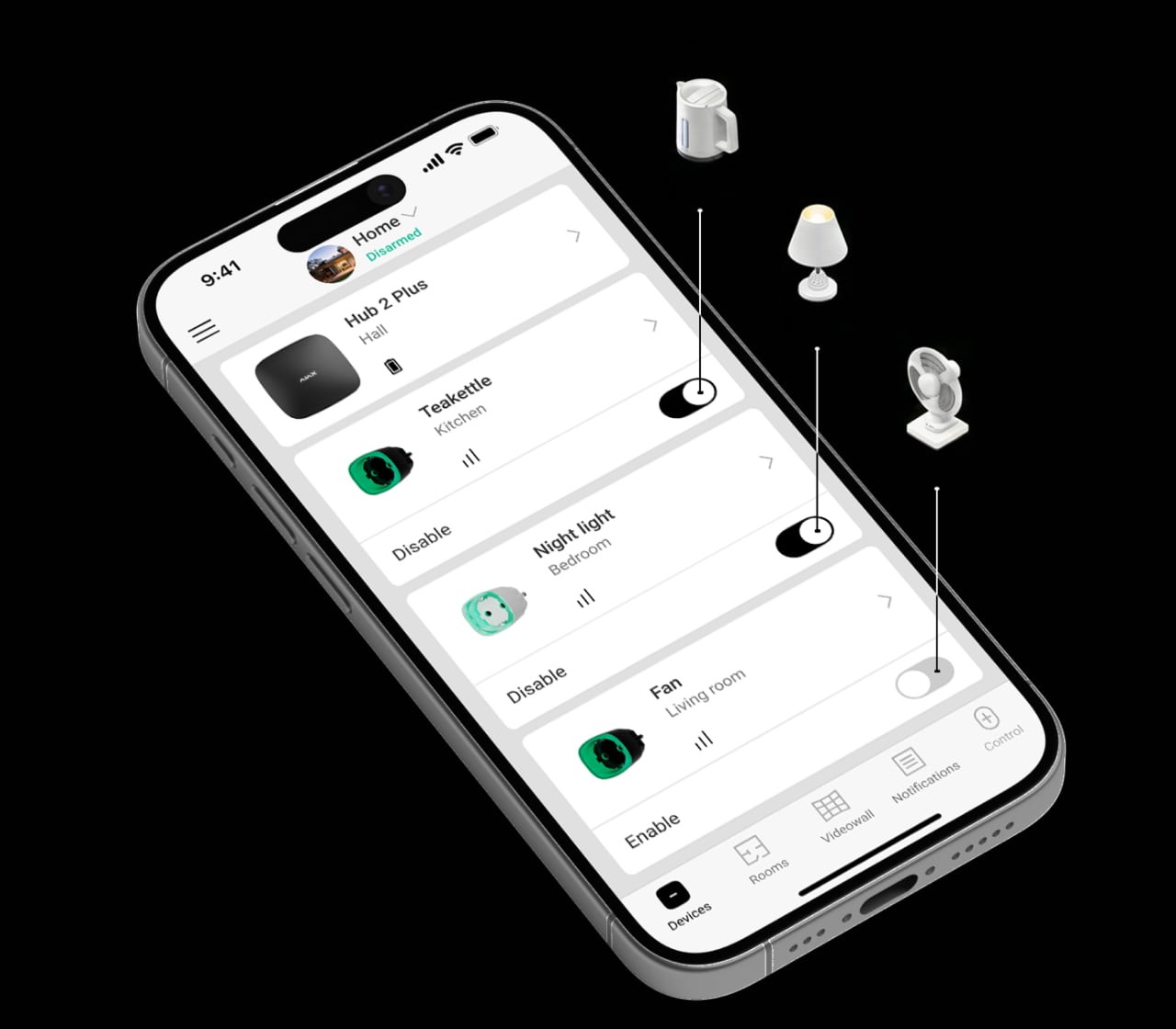
A configured command or schedule can turn on equipment that is designed for unattended remote operation.
Choose the appliance and intended action together; its own controls and operating instructions still apply.
Choose the trigger, contact state and operating mode around the connected equipment. Test each scenario on the installed system, including what happens if power or the hub connection is lost.
A device that is offline misses its scenario trigger. A missed scheduled action does not automatically run when power returns. Humidity and CO₂ scenarios require LifeQuality; other triggers need their corresponding system devices.
Jeweller carries device events, alarms and commands using encryption, device authentication, frequency hopping and automatic power adjustment.
Use a compatible hub and the matching regional radio version. Walls, metal and the final installation position affect reception; test the link on site. Alarm delivery and connection-loss reporting are different timings.
Scan the QR code in the Ajax app, give the plug a name and assign its room. Confirm that the device is within the compatible hub’s radio coverage.
Type F sends its pairing request on power-up. Follow the manual’s timing and unpairing procedure when moving it to another hub.
Compare Socket Type F, Type G and Type B for plug-in appliance control. Check the physical plug, local supply and load before comparing convenience features.
Compare power outlets →Review the electrical and regional requirements before selecting another plug type.
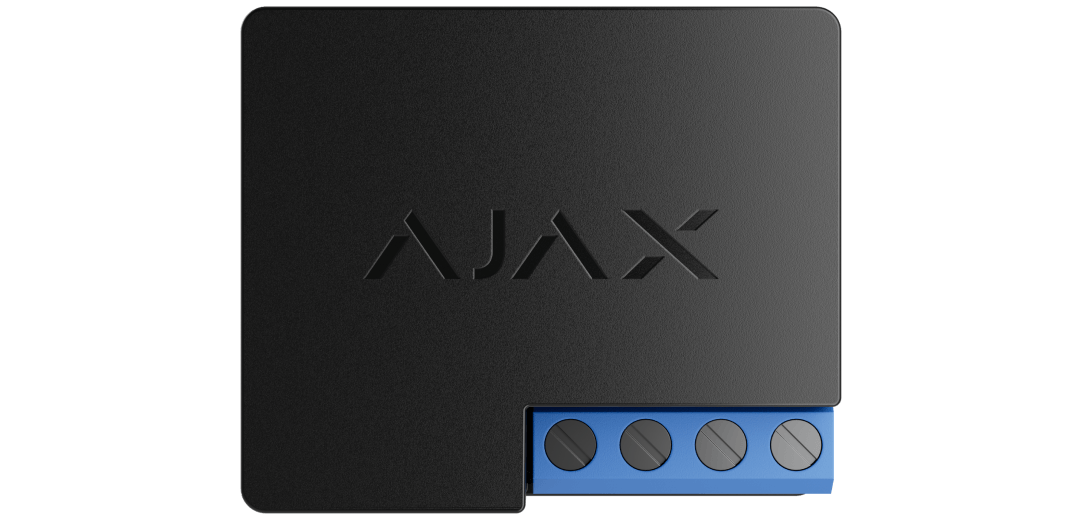
A professional can assess suitable mains switching inside an installation enclosure.