MAKE IT YOURS
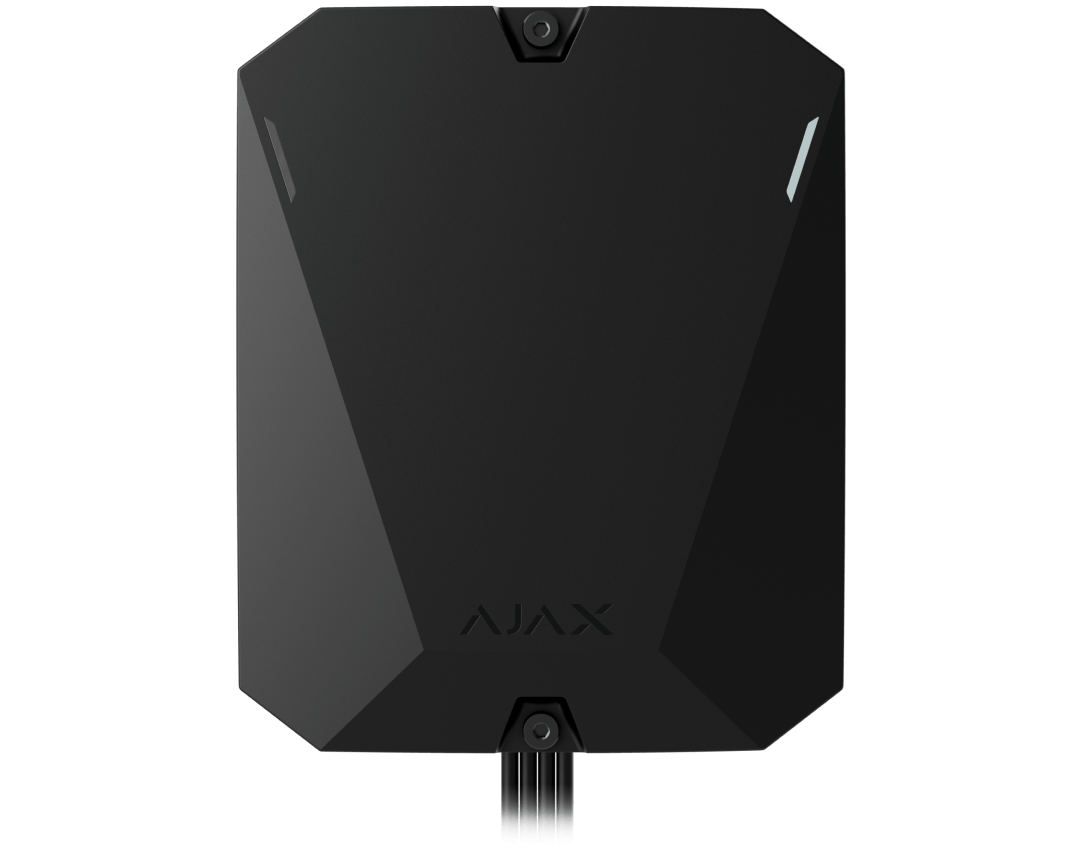
Superior MultiTransmitter Fibra.
Wired integration module with 18 configurable zones for third-party devices
Standards and certifications
Superior MultiTransmitter Fibra · MTR.Y.F. Manufacturer-listed marks; regional and installation conditions apply.
See Ajax for the certified enclosure and installation conditions.
for Superior MultiTransmitter Fibra (in casing)
Existing detectors. A new connection to Ajax.
Superior MultiTransmitter Fibra connects third-party wired detectors to an Ajax system through 18 configurable zones. It keeps useful existing equipment and wiring while bringing named events, remote settings and automation into Ajax apps. Its Fibra data connection, own mains supply and optional backup battery make it a bridge between the old installation and the wider system.
Key features. At a glance.
18 zones
for connecting third-party detectors
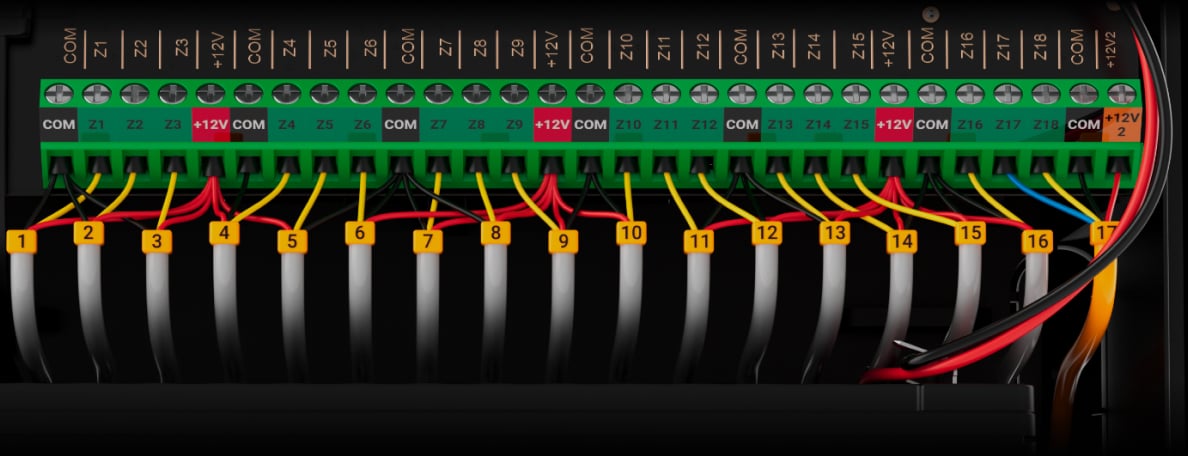
All connection types supported
NO, NC, EOL, 2EOL, 3EOL
Two operating modes
for pulse and bistable devices

Numerous event types
for connected devices

Intrusion

Panic button

Fire
Time-efficient installation
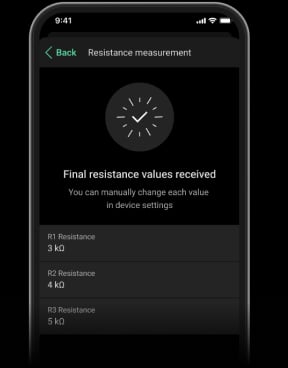
thanks to automatic EOL resistance measuring

Instant detection of wired connection loss
for EOL-connected devices
Four 12 V⎓ power supply outputs
one for a fire detector and three for other devices


Power adjustment


Two power supply options
powering by the mains or a backup power supply
Up to 400 m
of wired connection between devices and the integration module


Up to 2,000 m1
of communication with an Ajax hub or a module that extends the Fibra line

Remote control and configuration
Informative push notifications


Two colors2
- 1With U/UTP cat.5, 4 × 2 × 0.51 mm cable. Other cable types may have different values. Please use our Fibra power supply calculator to check the wired system project before installation.
- 2For Superior MultiTransmitter Fibra in the original casing.
Overview of this product range. Features and ratings can differ by version. Ajax product information ↗ · Superior MultiTransmitter Fibra specifications ↗
Superior MultiTransmitter Fibra
Every detail has a purpose.
Explore the function, installation and system requirements of Superior MultiTransmitter Fibra.
Loading detail…
Give existing equipment a new role.
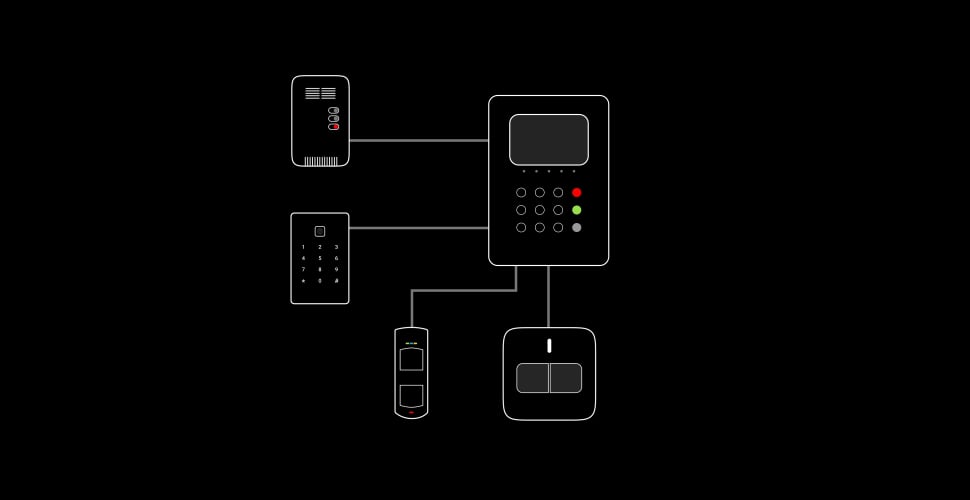
Bring wired detectors into Ajax
Retain suitable third-party detectors and their signal cables while replacing the way the system manages their events. Check the contact type, supply requirements and condition of every reused device before connecting it.
Keep the wiring. Identify each event.
18 individually configured zones
Connect suitable third-party devices with NC, NO, EOL, 2EOL or 3EOL contacts. Set pulse or bistable operation for each input. EOL resistors are 1–15 kΩ individually, with up to 30 kΩ total resistance; use the exact wiring diagrams and resistance ratios from the manual.
Make the message describe the real device.
Name the device, room and event
Select the appropriate event type for each connected device and give it a clear name and room. The configured type determines the notification and monitoring-station event code. A fire or leak event comes from the connected detector; the integration module does not detect that hazard itself.
Know which part of the site needs attention.

Named events in Ajax apps
Notifications identify the wired device, event and room. Review who receives each alarm and whether it should activate Ajax sirens or a configured automation scenario.
Use a wired contact to manage security.
KeyArm and lock-state inputs
Configure a suitable input to arm or disarm permitted groups or Night Mode. Other supported modes report the position of a blocking element or lock bolt. These are monitored inputs; this 18-zone module has no built-in control relays.
KeyArm requires a compatible hub with OS Malevich 2.17 or later; blocking-element and bolt-lock monitoring require 2.25 or later. Check the firmware and wiring scheme for the selected version.
Connect an event to a useful response.

Actions through Ajax automation
A wired detector alarm can trigger a configured action on a separate Ajax automation device. For example, switch on a light or operate a suitable access-control load. Design the response around the connected equipment and test the scenario.
Supply the module and its connected detectors.

Own mains supply and optional backup
Use 100–240 V AC mains and a separately purchased 12 V backup battery up to 7 Ah. The module supplies three general-purpose lines at 10.5–15 V DC, up to 1 A combined, plus a separate fire-detector line up to 0.4 A.
The Fibra line carries data without supplying this module’s operating power. A full load and standby calculation is still required.
Choose the enclosure arrangement.
Module with casing
The enclosed version includes its casing and installation kit. White and black refer to this enclosure. Fit the separately purchased backup battery and test opening and removal alerts.
One supervised wired connection.
Fibra communication
The four-wire connection carries data between the module and a compatible Ajax hub. Two-way communication, encryption with a dynamic key and device authentication help protect this connection. The module remains part of the hub’s system; it is not a standalone control panel.
Use the current compatibility list and supported firmware. The host’s device capacity and the line power budget still apply.
Plan the data path and cable limits.
Up to 2,000 m on the Fibra line
The stated Fibra reach assumes U/UTP cat.5 cable. It is separate from the shorter cable between the integration module and a third-party device. Check topology, signal strength, load and voltage at the final device; a ring has different limits.
Protection that also watches itself.

Detect changes in the wired connection
Supported EOL connections distinguish specified alarm and fault states, including short circuits or a broken wire. Wire the end-of-line resistors at the device and test each expected condition.

Supervise the connection to the hub
Regular polling lets the hub report a missing module. Event notifications identify the affected device and room so the fault can be investigated.
The 36-second example depends on a 12-second polling interval and three missed packets. Actual fault timing follows the hub settings.
Check the enclosure and tamper circuit
Test the third-party device’s configured tamper circuit. The module’s casing tamper switches or the Case tamper board also supervise opening and removal.
Plan additional electrical protection
A compatible LineProtect module can isolate a damaged section and protect devices between that module and the hub. It is a separate product and needs to be positioned as part of the line design.
Add, configure and test in Ajax PRO.
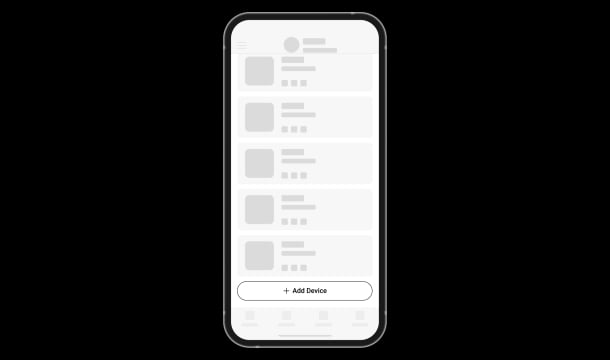
Find the installed module
Scan the hub’s Fibra lines or add the module by its QR code. Assign a name, room and security group so an event identifies the affected part of the site.
Find the right wired integration module.
Keep suitable wired detectors when moving to Ajax. Compare signal inputs, detector power and whether the module can also control equipment.
Compare wired integration →Every detail, in one place.
Communication
- Fibra communication technology
- Two-way wired transfer of alarms, events and commands, with device supervision and supported remote configuration.
- Line connection
- 4-core cable
- Fibra line length
- up to 2,000 m When the U/UTP cat.5 twisted pair cable is used.
- Encrypted communication
- Encrypted communication between the module and the compatible Ajax hub.
Wired devices connection
- Number of zones
- 18 wired zones Multiple devices can be connected to one zone. The number of connected devices depends on their power consumption.
- Type of connection
- NC, NO, EOL, 2EOL, 3EOL With EOL resistance from 1 kΩ to 30 kΩ with 100 Ω increment.
- Cable length
- up to 400 m When a copper signal cable with a 0.22 mm² cross-sectional area of the conductor is used.
- Operation mode
- pulse, bistable
- Event types
- 15 configurable types: tamper; intrusion; fire; auxiliary; panic; gas; malfunction; leakage; glass break; high temperature; low temperature; masking; duress (opening); vibration (seismic); custom. Configured in Ajax apps by a PRO or administrator.
Sabotage protection
- Tamper alarm
- Two tampers detect the opening of the lid and notify of attempts to tear the device from the surface or remove it from the mount.
- Protection against forgery
- Device authentication
- Communication loss detection
- within 36 seconds Between a hub and Superior MultiTransmitter Fibra.
- Instant detection of wired connection loss, short circuits, and malfunctions
- when 2EOL/3EOL connection is used Depends on the connection type.
Power supply
- Main
- 100–240 V~
- Backup
- 12 V⎓, up to 7 Ah capacity with a full charge cycle of up to 30 hours
- Type
- type A Used inside the protected premises.
- Operating AC voltage range
- 100–240 V~, 50/60 Hz Main power supply.
- Operating DC voltage range
- 10.5–15 V⎓ Backup power supply.
- Quiescent current consumption at nominal voltage
- 25 mA*
- Maximum current consumption at nominal voltage
- 30 mA* * From the backup rechargeable battery after the loss of the main power supply.
- Backup rechargeable battery capacity
- up to 7 Ah with a full charge cycle of up to 30 hours** When a 4 Ah rechargeable battery is used, the minimum operating time at a maximum load of 1.7 А is 2 hours. For autonomous operation for 12 or 24 hours, the maximum load should not exceed 0.3 A and 0.15 A, respectively. When a 7 Ah rechargeable battery is used, the minimum operating time at a maximum load of 1.7 А is 4 hours. For autonomous operation for 12 or 24 hours, the maximum load should not exceed 0.4 A and 0.2 A, respectively. ** It is the maximum time to recharge a 7 Ah battery to 80% of its capacity.
- Power supply of connected wired devices
- 10.5–15 V⎓, up to 1 A (total maximum current consumption) Three power supply lines from Superior MultiTransmitter Fibra.
- Power supply of connected fire detectors
- 10.5–15 V⎓, up to 0.4 A One power supply line from Superior MultiTransmitter Fibra.
- Low battery voltage
- 11.6 V⎓
- Low battery recovery voltage
- 12.9 V⎓
- End-of-life battery voltage
- 11 V⎓
- Maximum output peak-to-peak ripple voltage
- 200 mV⎓
- Minimum backup rechargeable battery energy level in the charged state
- 100%
Casing
- Dimensions
- 197 × 240 × 100 mm
- Weight of the device in a black casing
- 795 g Excluding the backup rechargeable battery.
- Weight of the device in a white casing
- 867 g Excluding the backup rechargeable battery.
- Operating temperature range
- from −10°C to +40°C
- Operating humidity
- up to 75%
- Protection class
- IP30, IK06 The new casing version of Superior MultiTransmitter Fibra has light guides for the integration module LED indication, while the previous version has the LED indicator on the board.
What’s in the box
- Superior MultiTransmitter Fibra
- Power cable
- Screw terminal block adapter (for INCERT compliance only)
- 12 V battery connection cable
- Casing (depending on the kit)
- Installation kit
- Quick start guide
For your installation
- Selected as part of an installer-reviewed security or automation project.
- Fibra needs a supported hybrid control panel, checked cable type and topology, termination and a complete power budget. Existing alarm cabling is not automatically suitable.
- The device is powered by 100–240 V~ mains and designed for indoor use only.
- Choose the exact version: sensing, power, casing, pack size or interface details can differ between the listed models.
Product documents.
Find the right protection.
Superior MultiTransmitter G3 Jeweller
Check its input, output, power and connection requirements.
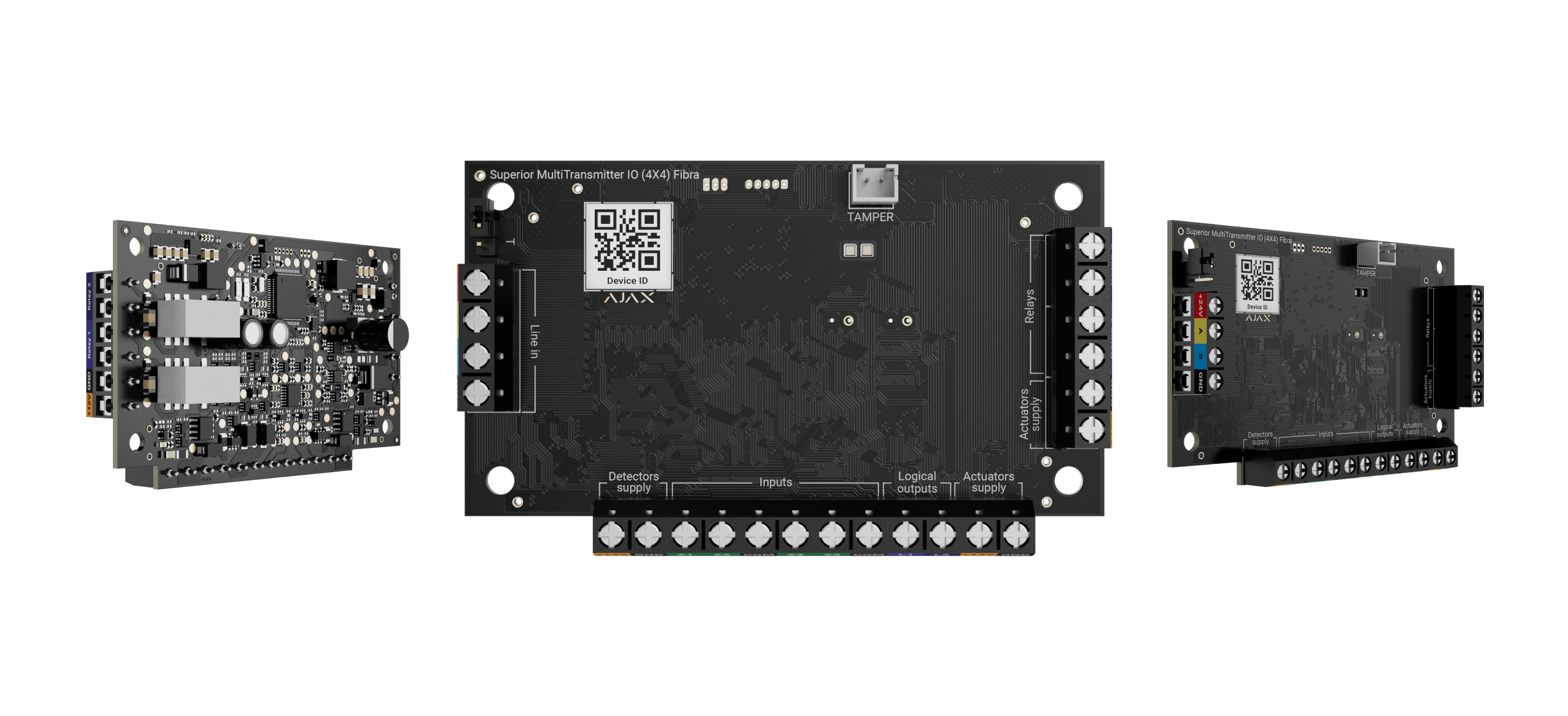
Superior MultiTransmitter IO (4X4) Fibra
Check its input, output, power and connection requirements.
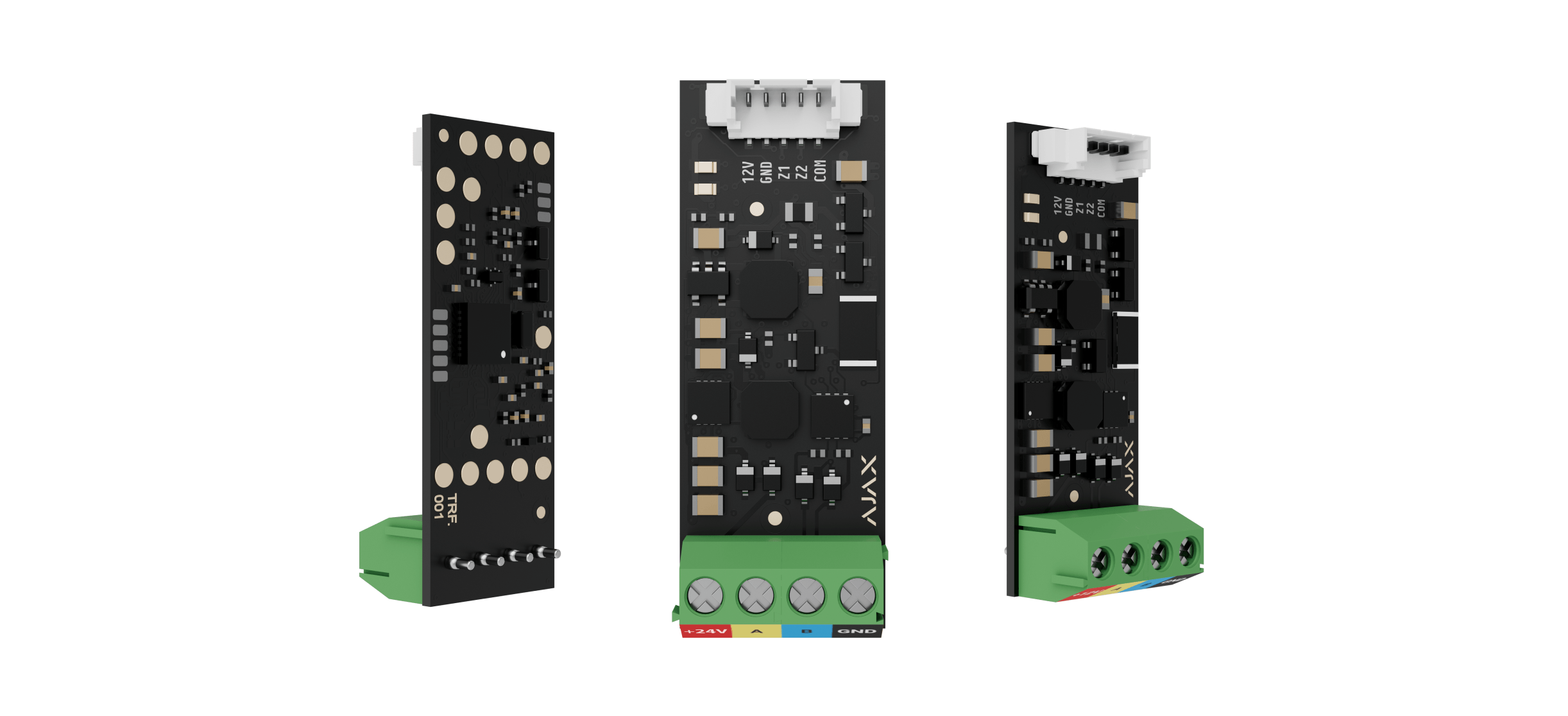
Superior Transmitter Fibra
Check its input, output, power and connection requirements.