MAKE IT YOURS
FireProtect 2 AC (Heat/Smoke/CO).
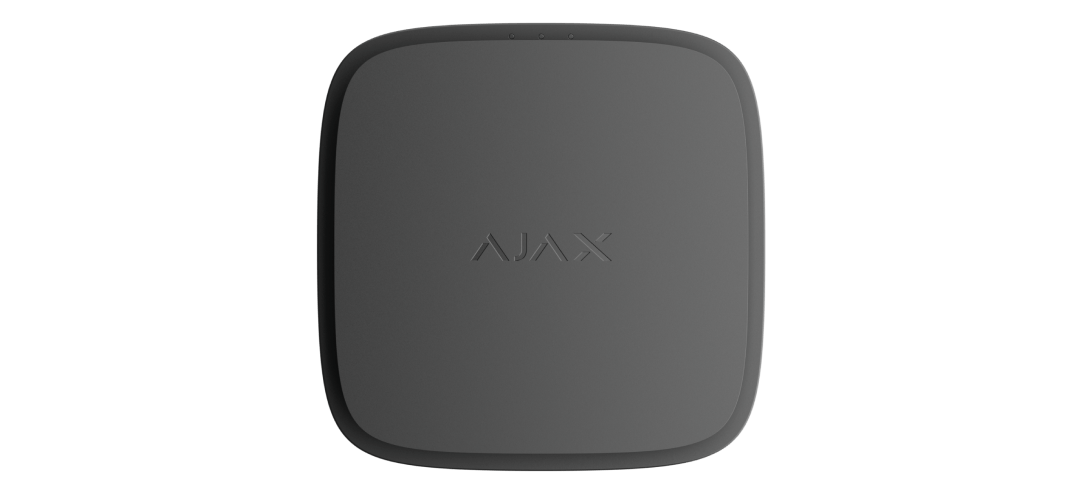
Wireless mains-powered fire detector with heat, smoke, and CO sensors
Standards and certifications
- EN 146042005 / AC:2008
- EN 50291-12018
- Grade D1BS 5839-6 · Fire
- AS 3786
- BSI KitemarkKM 797661 · CO
- BSI KitemarkKM 797639 · Smoke
FireProtect 2 AC (Heat/Smoke/CO) Jeweller · FP2.ACHSC.J. Manufacturer-listed marks; regional and installation conditions apply.
Three sensing functions. One mains-powered detector.
FireProtect 2 AC (Heat/Smoke/CO) Jeweller combines optical smoke detection, two heat sensors and a chemical carbon monoxide sensor. It uses mains power with a non-replaceable backup battery and can sound a local alarm independently. A compatible Ajax hub adds remote status, notifications and configured alarm interconnection.
Key features. At a glance.
Two types of interconnected fire alarm1

Primary: via an Ajax hub, an alarm in 20s
Sensors

Heat

Smoke

CO
Main power supply2
110–240 V~
Backup battery
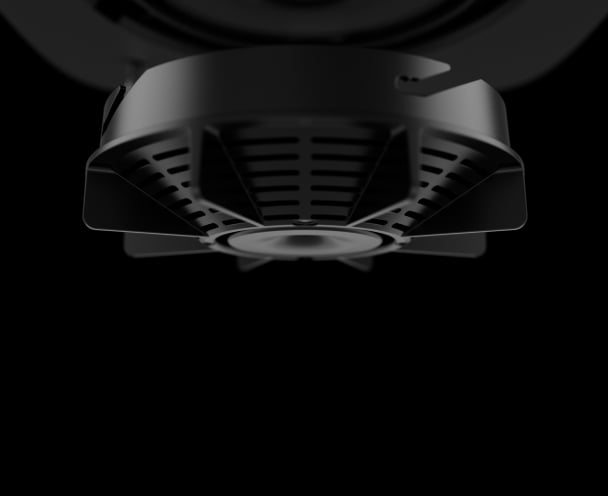
Dustproof smoke chamber impenetrable for insects
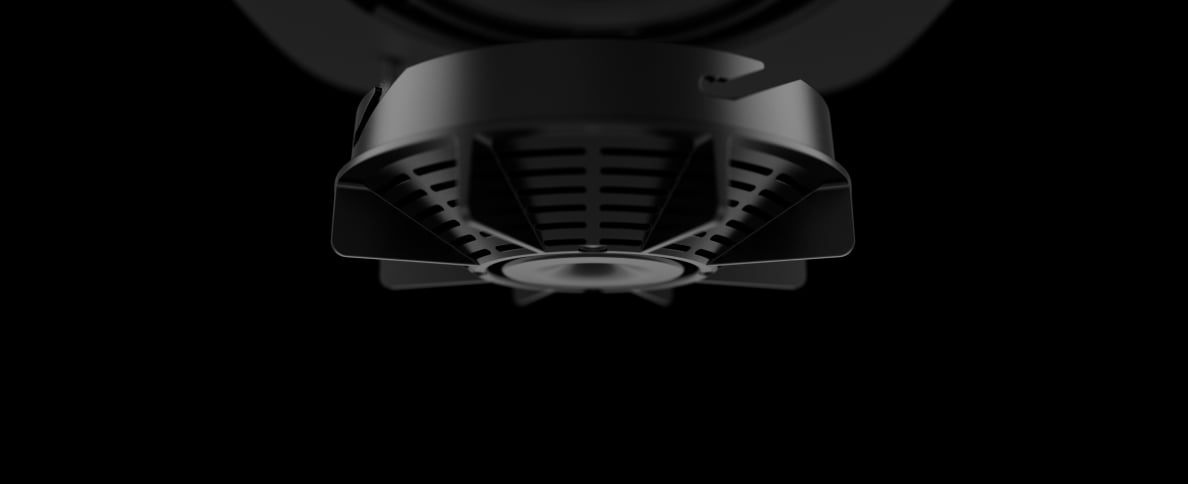
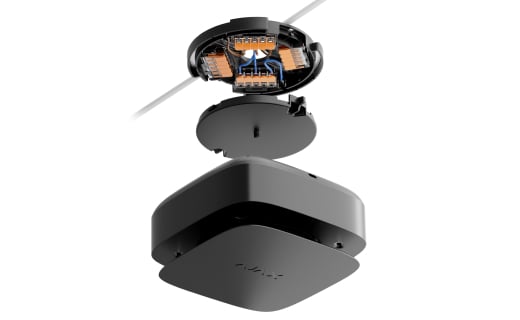
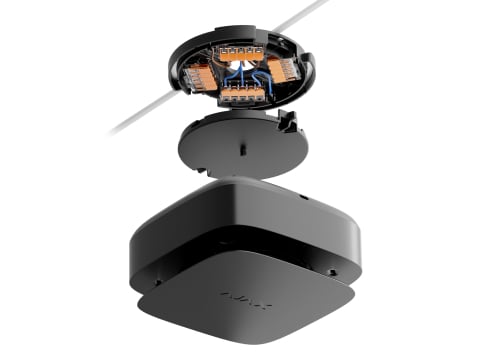
SmartBracket
with an adjustable rotation angle
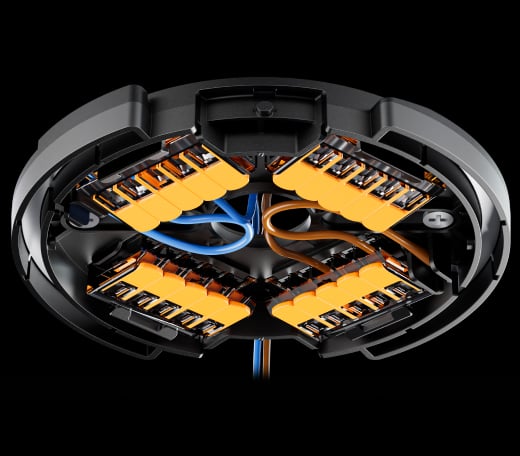
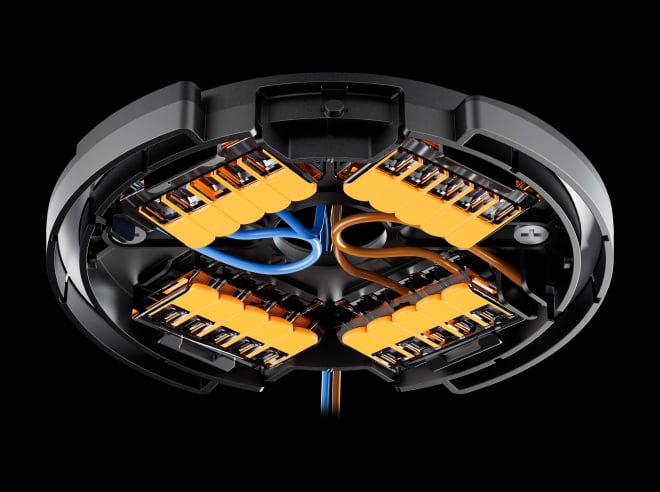
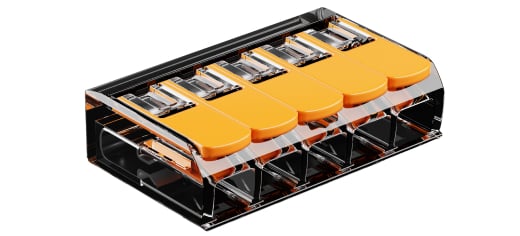
Easy wiring
with WAGO 221
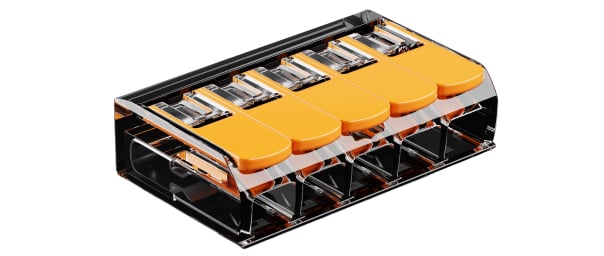
85 dB built-in siren
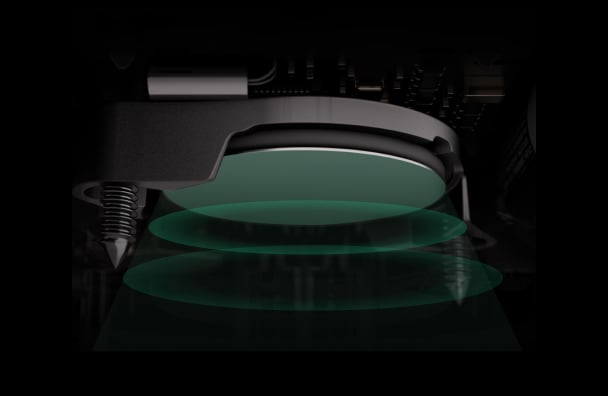
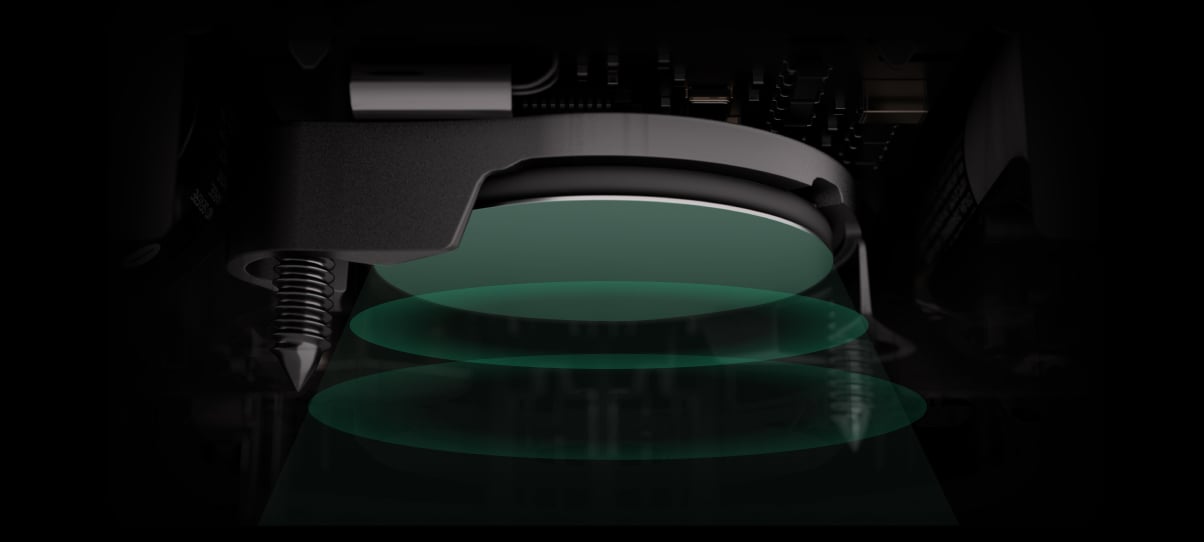
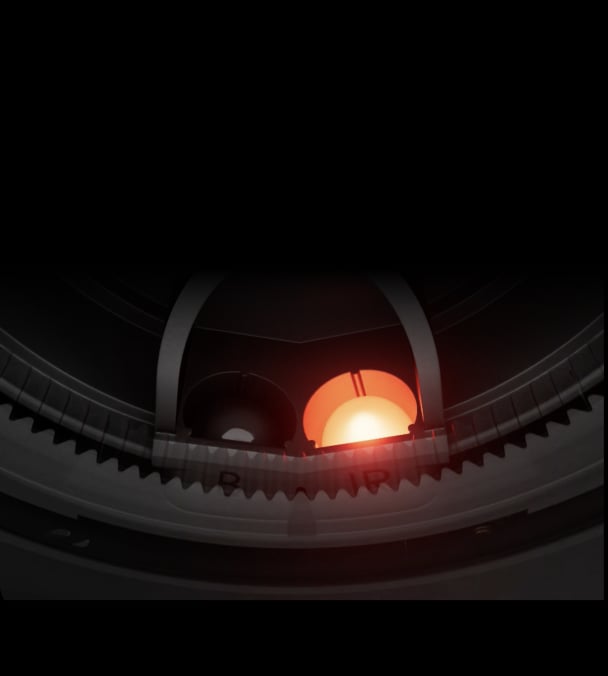
Dual-spectrum optical smoke sensor
with the HazeFlow 2 software algorithm to filter false alarms


Remote control and configuration
Operates as part of the Ajax system or without pairing with an Ajax hub
Informative in-app notifications

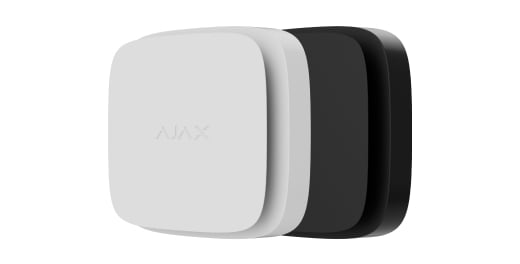
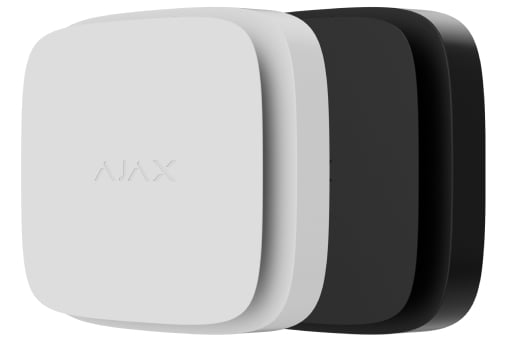
Two colours
Up to 1,700 m3
range of communication with an Ajax hub
- 1Requires supported detector hardware/firmware, hub version, configuration and tested radio coverage. See the interconnection section for the applicable conditions.
- 2The backup battery is non-replaceable. Replace the detector when the backup battery is depleted or the 10-year service life ends.
- 3Range is measured in open space; walls and installation conditions reduce it.
Ajax product information ↗ · FireProtect 2 AC (Heat/Smoke/CO) Jeweller specifications ↗
Protection in real places.
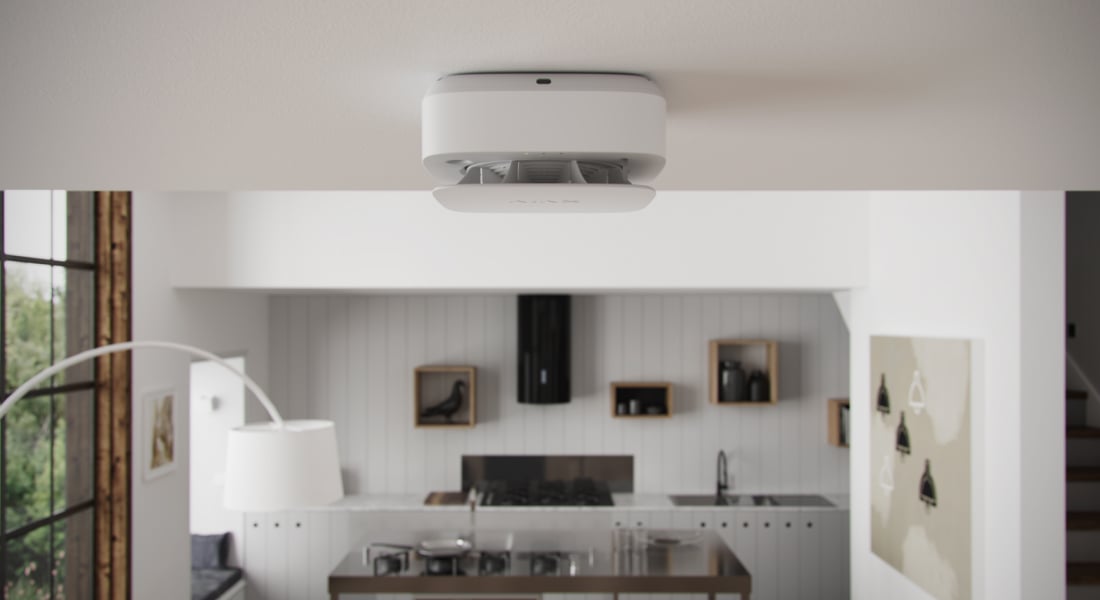
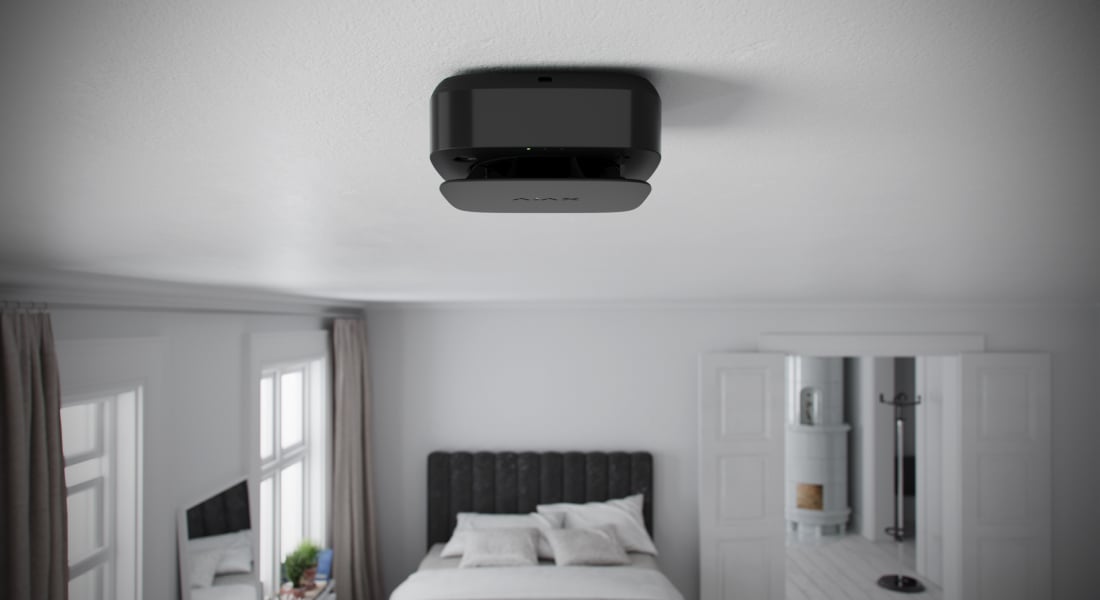
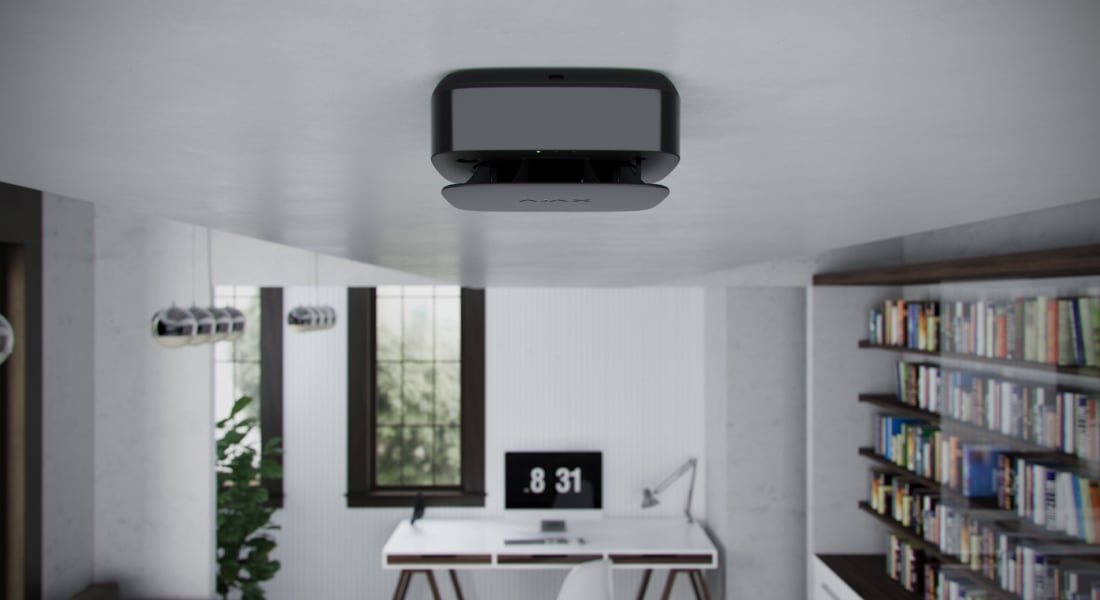
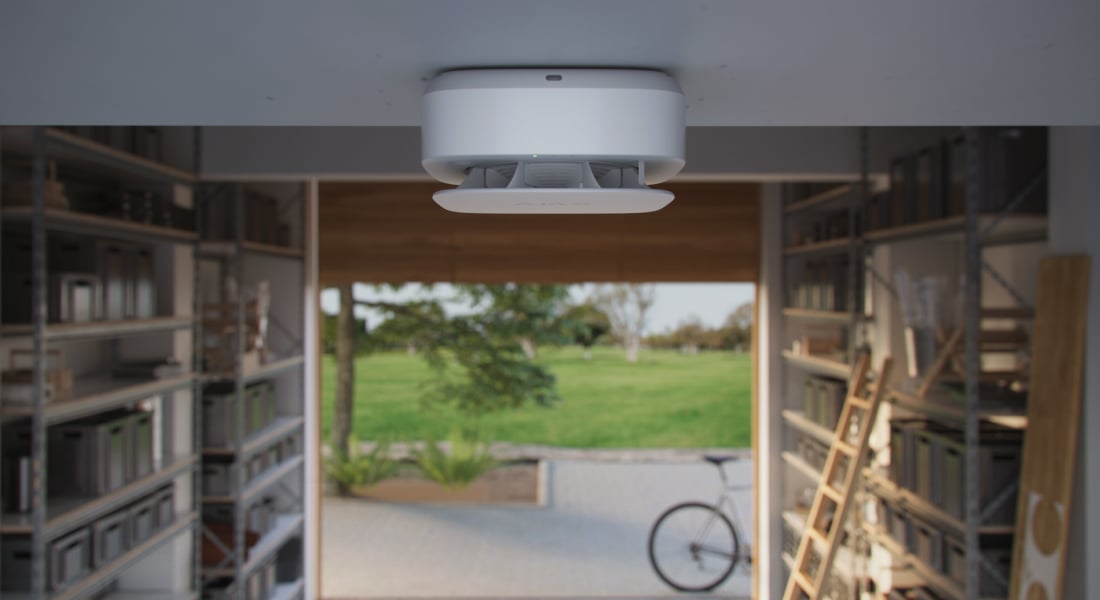
Look closer at smoke detection.
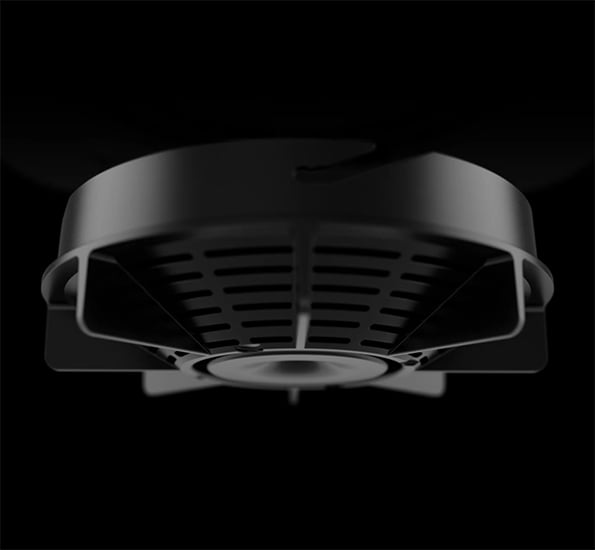
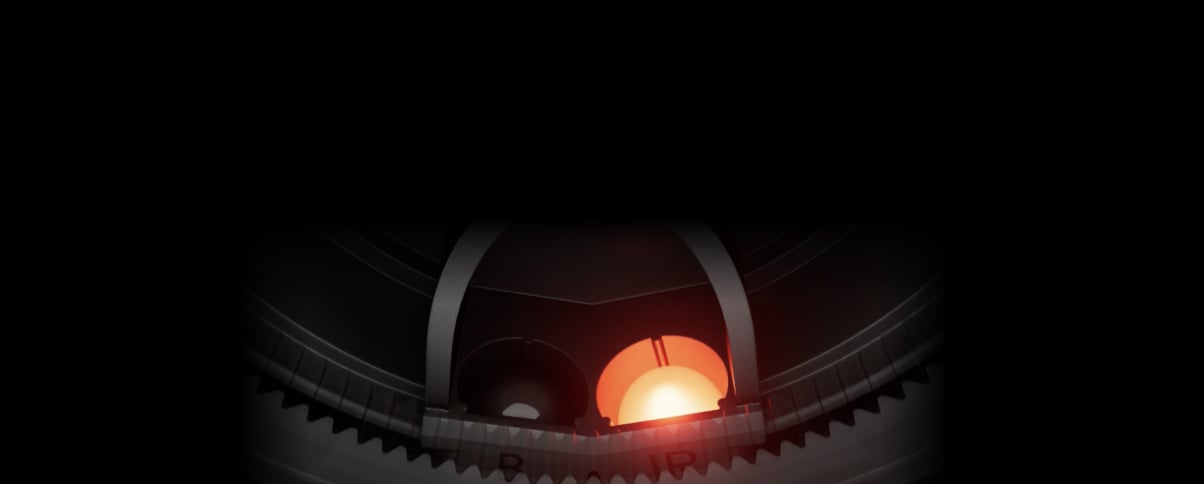
A protected optical chamber
The smoke chamber directs air past the optical sensor while its design limits interference from dust and insects. Keep the exterior clean and follow the manual; do not open the smoke chamber for routine cleaning.
Detect a high temperature or a sudden rise.
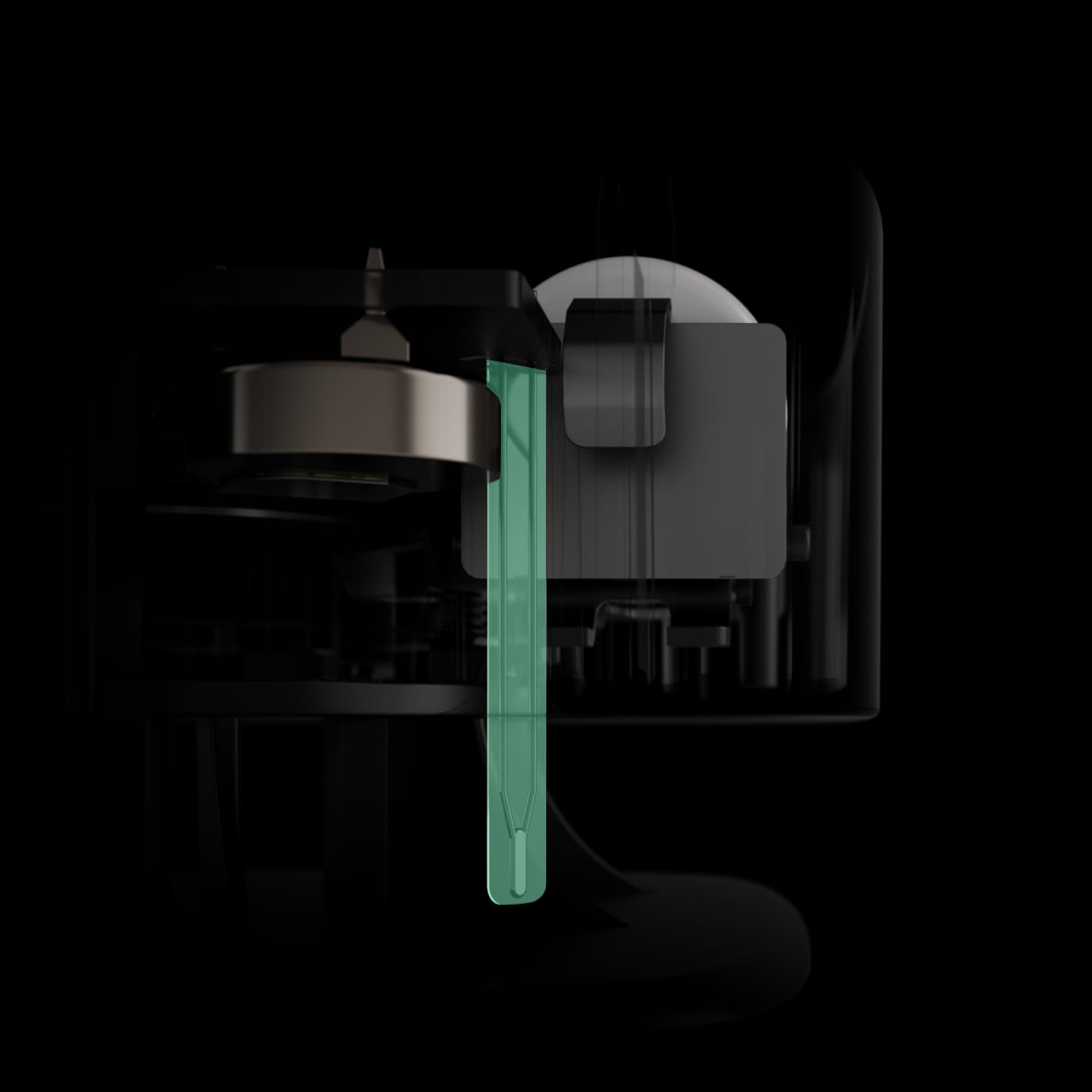
Two A1R-class thermistors
Two thermistors monitor temperature outside the enclosure. The detector raises a heat alarm above +64 °C or when temperature rises by more than 10 °C within one minute.
These alarm conditions apply to the European model. Choose the sensor combination and installation position for the room; heat detection does not replace required smoke coverage.
Monitor carbon monoxide as well as exposure time.
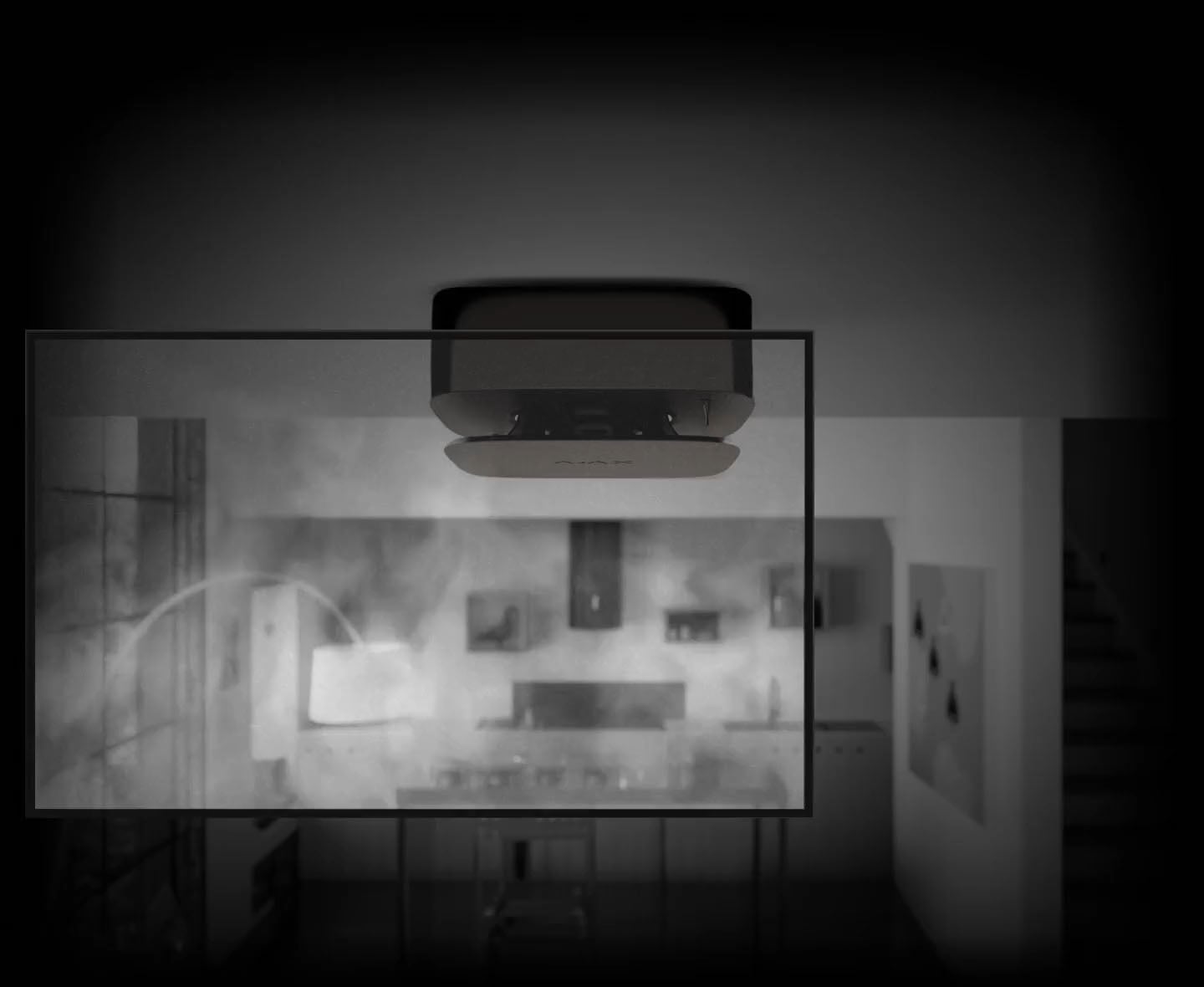
A dedicated chemical CO sensor
The sensor responds to accumulated carbon monoxide exposure. Ajax specifies an alarm within 90 minutes at 50 ppm, 40 minutes at 100 ppm and 3 minutes at 300 ppm. The CO sensor has a 10-year service life.
This is a carbon monoxide alarm, not a detector for methane or other fuel gases. It does not replace proper installation and maintenance of fuel-burning appliances.
Mains power. Backup when the supply stops.
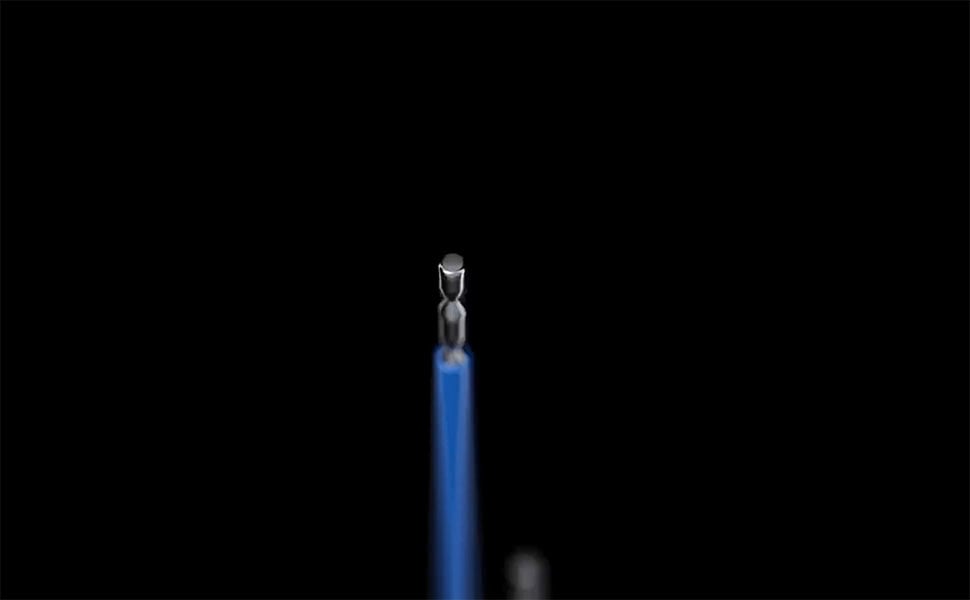
110–240 V AC with a built-in reserve
The detector uses 110–240 V AC at 50/60 Hz, with mains consumption up to 2 W. A built-in CR-2/3AZ lithium battery provides backup when the external supply is interrupted. The app shows external-power and backup-battery status when a hub is connected.
The backup battery is non-replaceable. Replace the detector when that battery is depleted or at the end of its 10-year service life. Battery Life Optimization must be enabled; backup endurance depends on use and conditions.
A local alarm, with a clear device status.
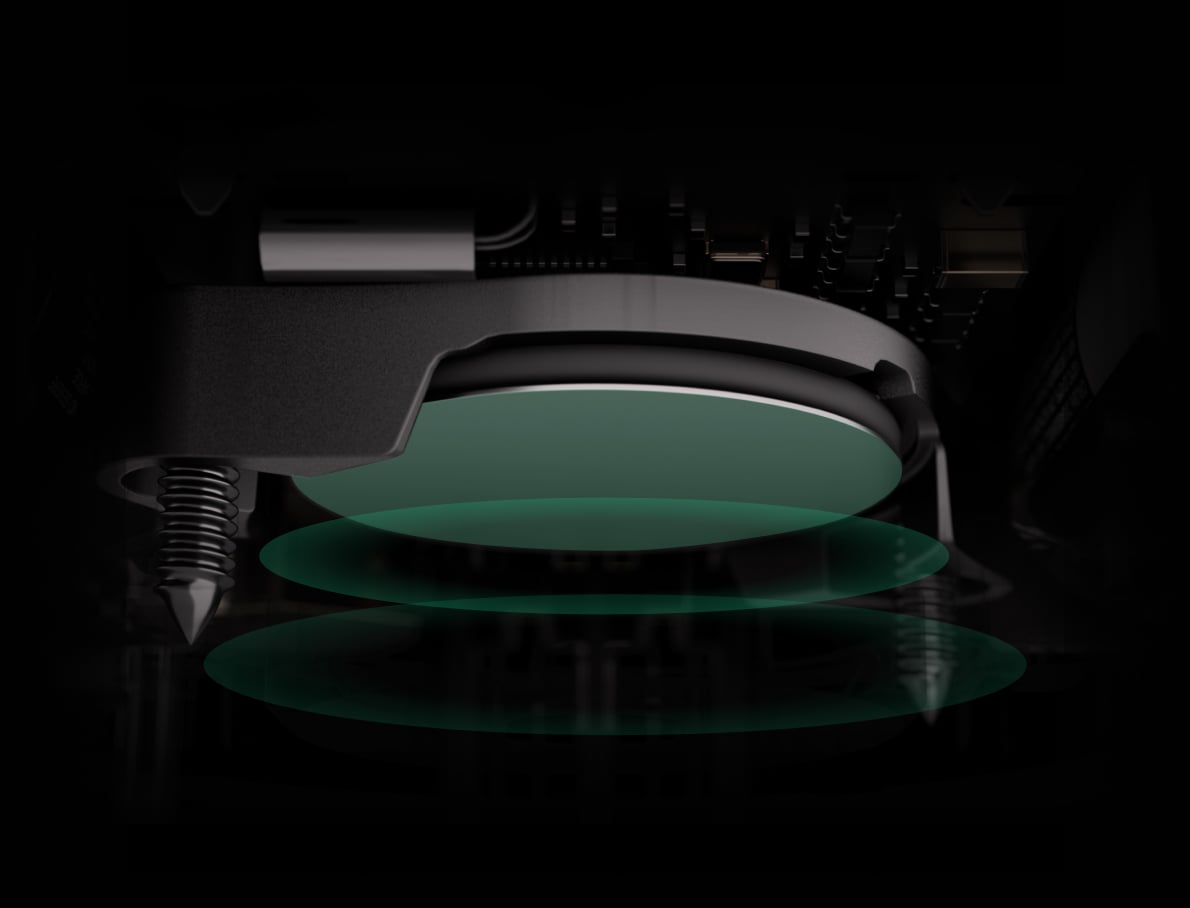
85 dB sound and LED indications
The built-in siren is rated at 85 dB at 3 m. Sound patterns and LEDs distinguish an alarm from a fault, low battery or end of life. With a compatible connected hub, configured app notifications identify the detector and its room.
The detector monitors its own sensors even when the intrusion system is disarmed. As a standalone detector it provides local warnings; app notifications and remote settings require a hub.
One detector can warn the others.
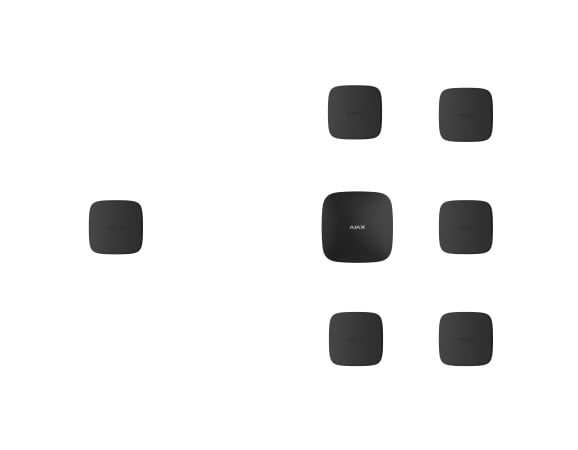
Primary alarm through the hub
An enabled detector sends its alarm to the compatible Ajax hub, which activates the other fire detectors within 20 seconds. System capacity depends on the hub, connected devices and configuration.

A direct path between detectors
Compatible FireProtect 2 detectors can propagate the alarm directly within 60 seconds, including when the hub connection is lost. This fallback path runs alongside primary interconnection.
Requires supported detector hardware and firmware 5.59.2-series or later, the enabled fallback setting and a successful coverage test. With a hub, use OS Malevich 2.19 or later; Hub (4G) requires 2.28 or later.
A local network without a hub
Supported detectors can be paired into a standalone alarm network of up to 50 units. Follow the exact pairing instructions and test coverage. This arrangement provides local sound and LED warnings; it does not send Ajax app notifications without a hub.
Keep the radio path connected.
Jeweller two-way communication
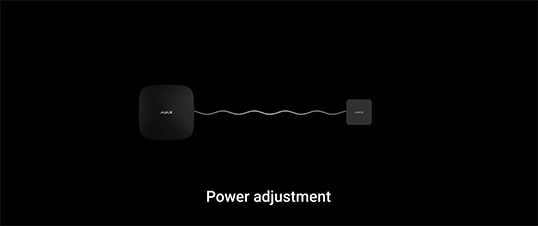
Jeweller carries alarms and device states using encrypted communication, device authentication, frequency hopping and automatic power adjustment. Check the model’s specified open-space range and measure signal strength in its installed position.
Check the hub before installation.
Exact model and firmware matter
These AC detectors require a supported Ajax hub with OS Malevich 2.18 or later. Hub (4G) requires 2.28 or later. Fallback interconnection has the additional conditions described above. Confirm the radio region and exact compatibility list before pairing.
See the alarm and its source.
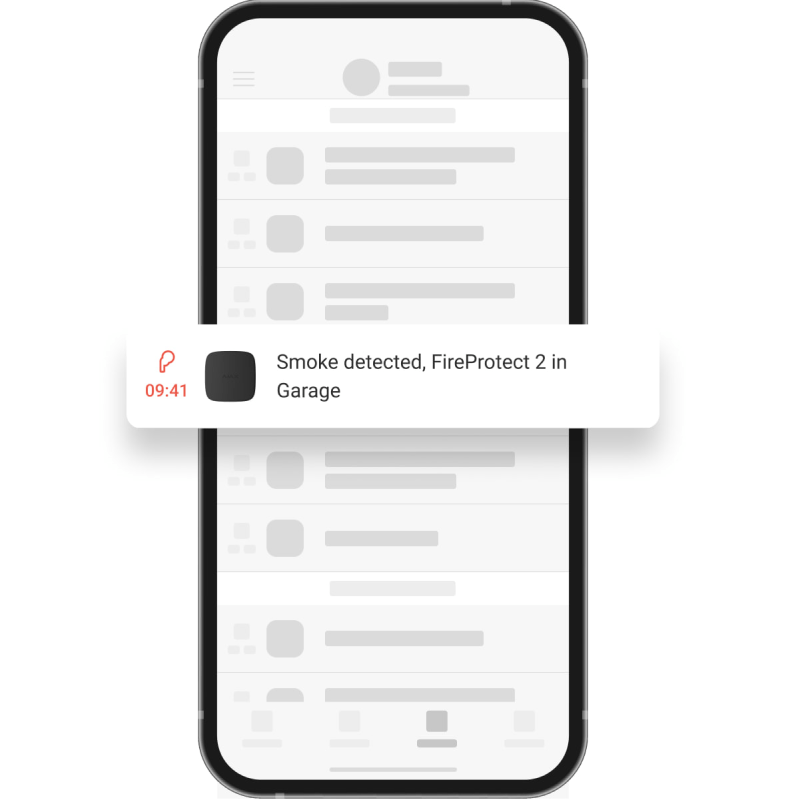
Device, room and event history
With a connected hub, Ajax app notifications identify the detector and room. The event log records the time and event type. Configured PRO Desktop or monitoring-station integration adds an operator view; monitoring service and response arrangements are separate.
Add context to an alarm.
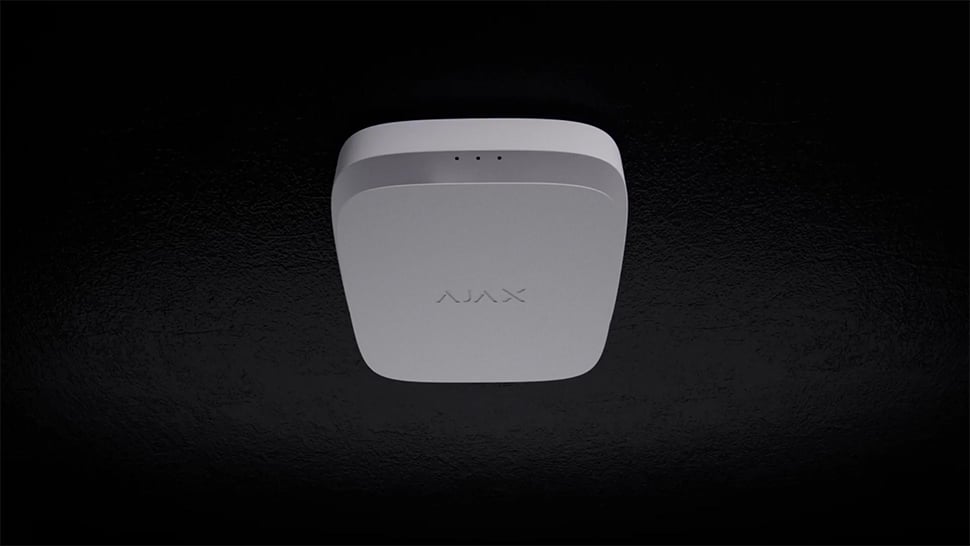
Photos from a separate detector
A compatible MotionCam (PhOD) can take photos after a configured FireProtect 2 alarm. A suitable hub, photo permissions and the scenario must be set up beforehand. FireProtect 2 AC has no built-in camera.
Separate automation devices can support a professionally planned response involving suitable circuits or door hardware. Scenarios do not replace the required alarm response.
A neat route for surface wiring.
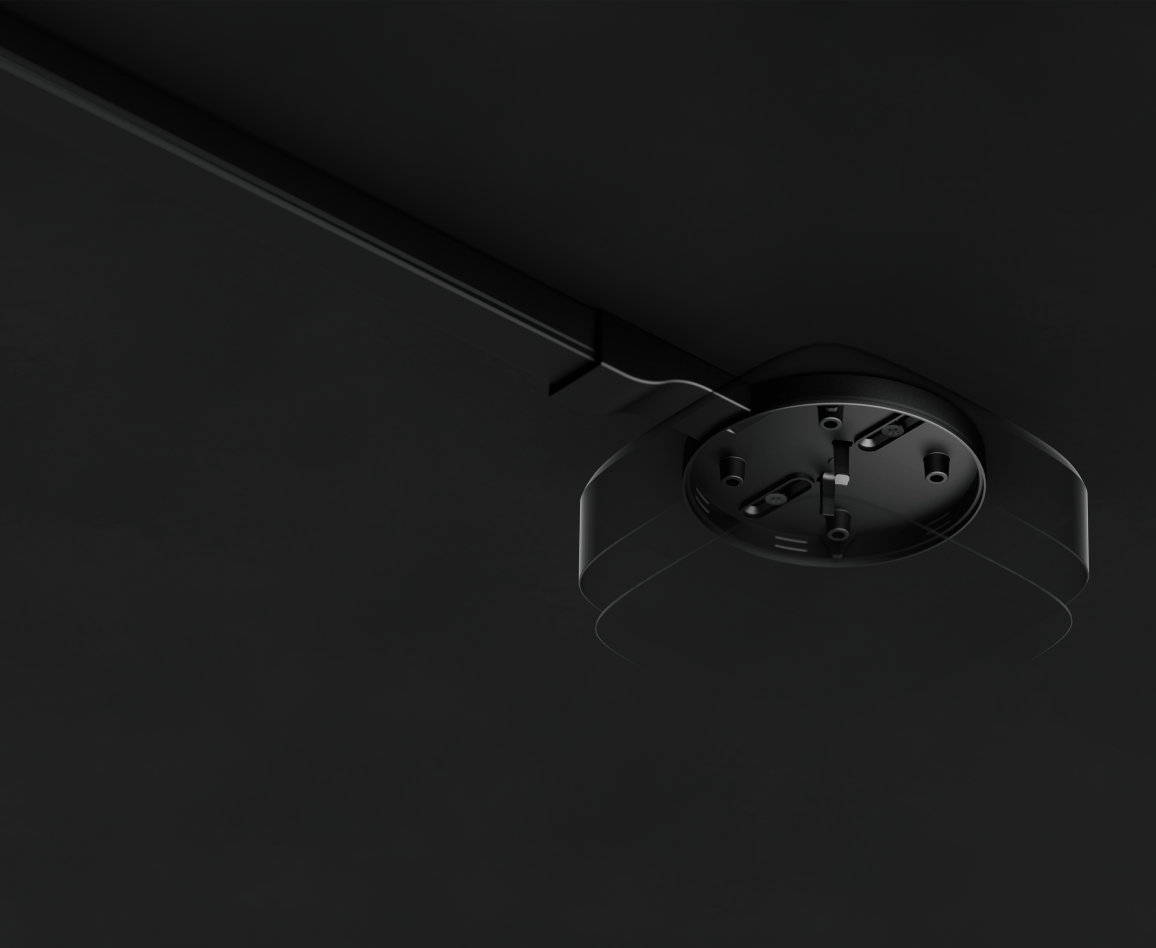
CableTrunk, where the cable comes from the side
The optional CableTrunk accessory joins surface cable trunking to FireProtect 2 AC. It provides a dedicated route to the mounting panel while keeping the ceiling finish tidy.
CableTrunk is a separate accessory. Electrical work and cable routing must be included in the installation plan.
Wire, pair and check the installation.
SmartBracket with WAGO 221 connectors
A qualified installer connects the mains supply using the two pre-installed WAGO 221 terminals in SmartBracket, fixes the panel and aligns the detector. Choose the mounting position and clearances from this model’s manual.
Indoor use only: 0 to +50 °C and up to 80% humidity. Electrical work is planned and quoted separately. A room photograph is an application example, not a placement rule.
Test it. Respond to service warnings.
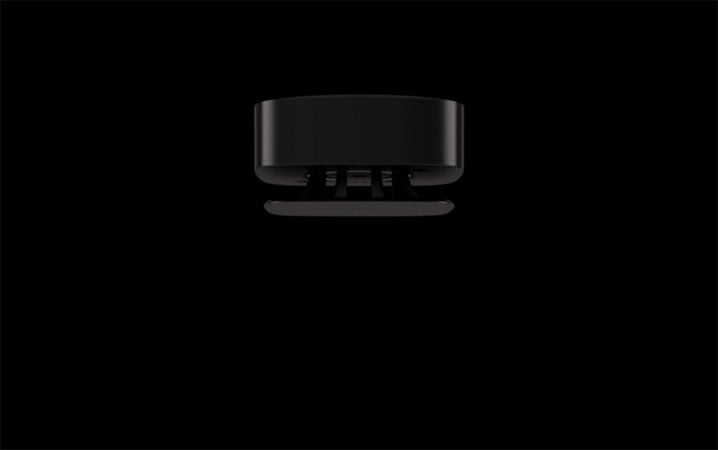
Test/Mute on the front panel
Press the centre of the front panel to start the detector self-test as described in the manual. App testing is available with a connected compatible hub. Check the sound and light indications after commissioning and follow the regular testing schedule.
Wait at least 3 minutes after switching the detector on before testing. Local requirements may call for more frequent checks.
Plan for the detector’s service life
Respond to fault, low backup-battery and end-of-life warnings. The detector has a 10-year service life and must also be replaced if its non-replaceable backup battery is depleted. Do not treat a renewed mains connection as a battery replacement.
Treat a CO alarm as an alarm.
Silencing is not an all-clear
Use remote silencing only while in the line of sight of the CO detector. The alarm cannot be muted when the CO level exceeds 300 ppm. Silencing the sound does not remove the hazard; follow the emergency instructions in the manual and your local response procedure.
Find the right fire detector.
Compare what each FireProtect detects, how it is powered and what you will need to maintain. Choose the sensor combination for the hazards in the room.
Compare fire detectors →Every detail, in one place.
Communication
- Jeweller communication technology
- Two-way system communication for the functions specified for this model.
- Radio communication range
- up to 1,700 m Between detector and hub (or range extender) in an open space.
- Encrypted communication
- Encrypted device communication.
- Frequency hopping
- Radio communication uses frequency hopping to prevent interception and jamming.
Sensitive elements
- Sensitive elements
- smoke sensor; ; heat sensor; ; CO (carbon monoxide) sensor
Smoke detection
- Sensitive element
- double-spectrum optical sensor Detects smoke by the size of particles in the air.
- Protection from false alarms
- Does not react to water vapor.
- Patented smoke chamber
- Protects the smoke sensor from dust, dirt, and insects.
Dangerous temperature detection
- Sensitive element
- according to the requirements for Class A1R heat detectors Requirements of EN 54-5 and BS 5446-2 standards.
- High temperature alarm
- at temperatures above 64°C
- Temperature spike alarm
- when the temperature rises by more than 10°C in 1 minute or less
Carbon monoxide (CO) detection
- Sensitive element
- chemical CO sensor
- Alarm if accumulated dose of CO is exceeded
- over 50 ppm (0.005%) — in 90 minutes or less; over 100 ppm (0.01%) — in 40 minutes or less; over 300 ppm (0.03%) — in 3 minutes CO concentration exceeding 400 ppm (0.04%) within a span of 3 hours poses a life-threatening risk. The detector will cease notifications regarding hazardous carbon monoxide levels once the concentration decreases to 50 ppm (0.005%) within a 1-minute duration.
- Sensor service life
- 10 years After 10 years of operation, the detector must be replaced with a new one.
Additional features
- Built-in siren
- volume 85 dB at a distance of 3 meters Sound notification of alarms. Remains active until the reason for triggering is eliminated or until the user manually disables the notification.
- Interconnected fire detectors alarms
- via primary interconnection If one of the fire detectors in the system detects a threat, it sends an alarm to the hub. Within 20 seconds, the hub initiates an interconnected alarm and sends data to Ajax apps. via fallback interconnection At the same time with notifying the hub, the initiating detector sends an alarm directly to other detectors. All connected detectors activate the buzzer within a minute. It will work even in the worst-case scenario of losing connection with the hub.
- LED indication
- green is a power indication An LED indicator on the device enclosure lights continuously when powered by an external power source. If the device draws power from the backup battery, the LED indicator lights up once every 56 seconds. This indication complies with the requirements stipulated in EN 14604 and EN 50291 standards. yellow is a malfunction indication An LED indicator on the device enclosure lights up to signal detected malfunctions. This can occur in instances such as battery depletion, smoke chamber contamination, or reaching the end of the service life. red is a fire alarm indication An LED indicator on the device enclosure lights up when the detector registers a fire alarm.
- Button on the front panel of the detector
- In normal mode, when pressed, it starts the smoke chamber test. In the event of an alarm or malfunction, the pressing turns off the detector sound notification.
- External power supply
- 110–240 V~, 50/60 Hz The phase and neutral cables from the external power supply should be connected to the WAGO terminals on SmartBracket mounting panel. To remove the detector from SmartBracket, there is no need to disconnect the power cables.
Sabotage protection
- Tamper alarm
- Notifications on attempts to detach the detector from the surface or remove it from the mounting panel.
- Protection against spoofing
- device authentication
- Communication loss detection
- within 15 minutes The time required to detect a communication loss depends on the settings for the number of undelivered data packages (specified in the Jeweller or Jeweller/Fibra settings).
Power supply
- Main
- 110–240 V~, 50/60 Hz Up to 2 W of mains power consumption.
- Backup
- 1 non-replaceable lithium battery CR-2/3AZ Allows the detector to operate autonomously without the main power source.
Enclosure
- Dimensions
- 122 × 122 × 54 mm
- Weight
- 318 g
- Operating temperature range
- from 0°С to +50°С
- Operating humidity
- up to 80%
What’s in the box
- FireProtect 2 AC (Heat/Smoke/CO) Jeweller
- SmartBracket mounting panel
- WAGO 221 3-conductor terminal — 2 pcs.; (pre-installed in SmartBracket)
- Installation kit
- Quick start guide
For your installation
- Confirm the supported control panel, device software and regional radio version; test coverage at the final installation position.
- The device is designed for indoor installation only.; SmartBracket mounting panel allows adjusting the position of the detector even after installation.
Optional additions
Product documents.
Find the right protection.

Hub 2 Plus Jeweller
Review hub connectivity, then confirm this detector’s compatibility and firmware.
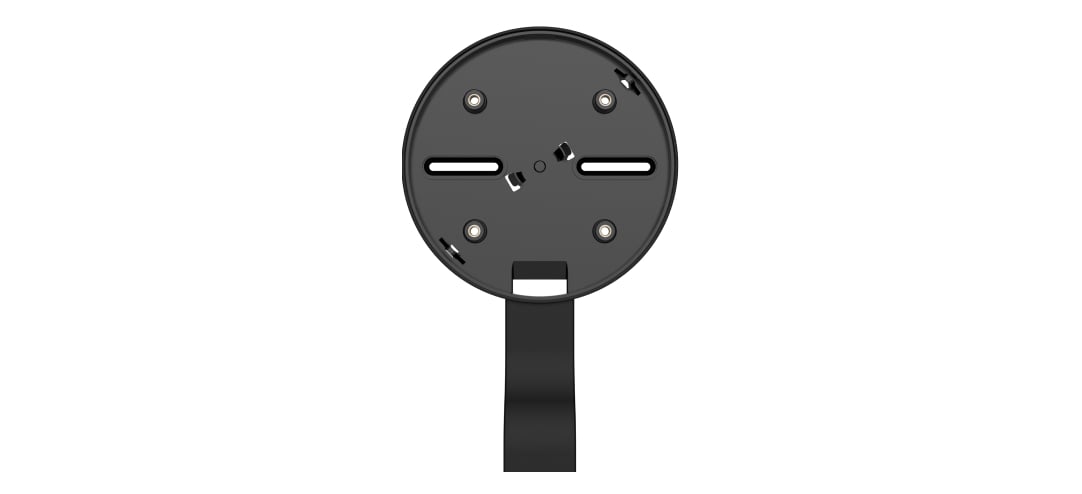
CableTrunk
Explore the accessory for surface trunking and AC detector installation.
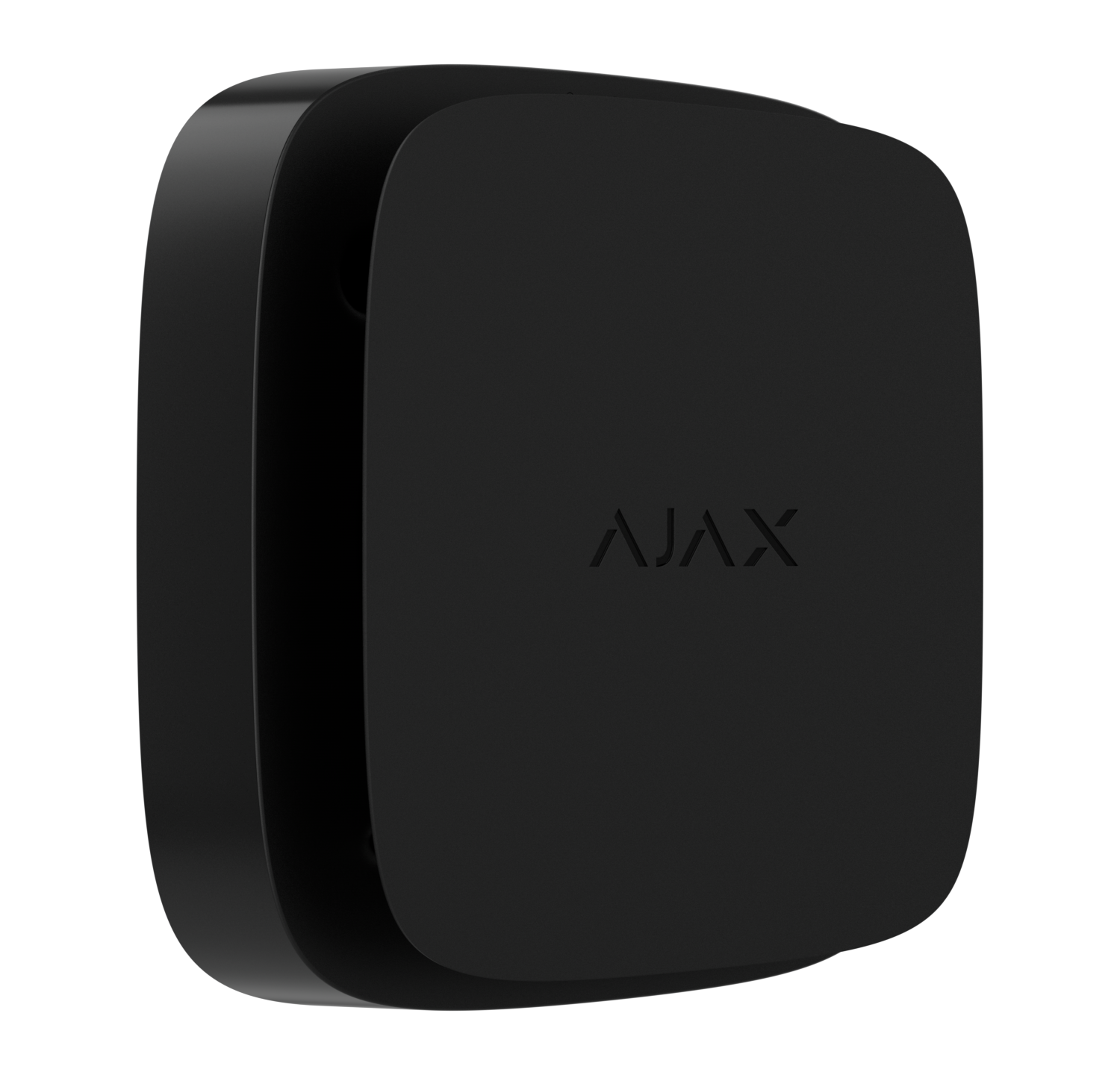
FireProtect 2 (Heat/Smoke/CO) Jeweller
Explore the RB version of this sensor combination when a mains connection is not suitable.