MAKE IT YOURS
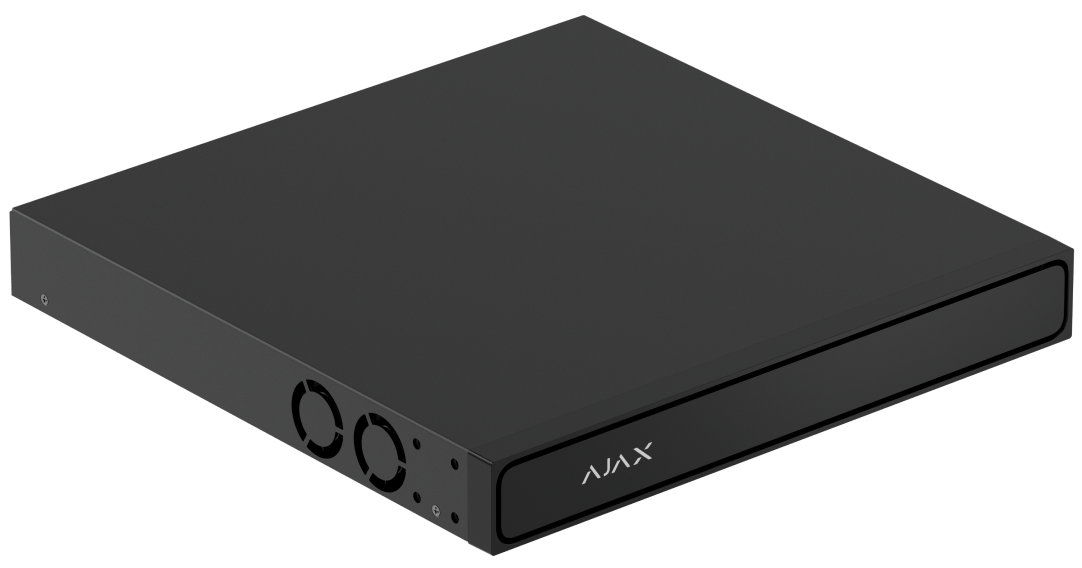
Superior NVR H2D.
AI-powered recording, two drive bays and configurations for larger camera systems.
Standards and certifications
Ajax Superior NVR H2DAI8PAC (8-ch) · NVR.AI8PAC8.Y. Manufacturer-listed marks; regional and installation conditions apply.
Bring intelligent search to your existing video system.
Superior NVR H2D adds onboard object recognition for compatible third-party camera streams, 4K HDMI and two hot-swappable drive bays rated up to 24 TB each. Choose 8, 16 or 32 recording channels, PoE connections or dual Gigabit Ethernet. Analytics and simultaneous viewing have their own processing limits, so the exact version is matched to the project.
Key features. At a glance.


Overview of this product range. Features and ratings can differ by version. Ajax product information ↗ · H2DAI8PAC (8-ch) specifications ↗
Recording, in real places.
Start with the cameras you need.
8, 16 or 32 recording channels
Choose a Superior NVR H2D version for 8, 16 or 32 connected camera streams. Leave capacity for planned viewpoints and match the combined stream bitrate to the selected recorder’s incoming and outgoing bandwidth.
Channels, ports and viewing are different limits
A channel is a camera stream the recorder can accept. PoE ports supply power and a network connection only on equipped models. Simultaneous on-screen decoding and playback have their own limits.
A 32-channel recorder does not mean 32 powered ports or 32 simultaneous 4K views.
Bring your cameras into one system.
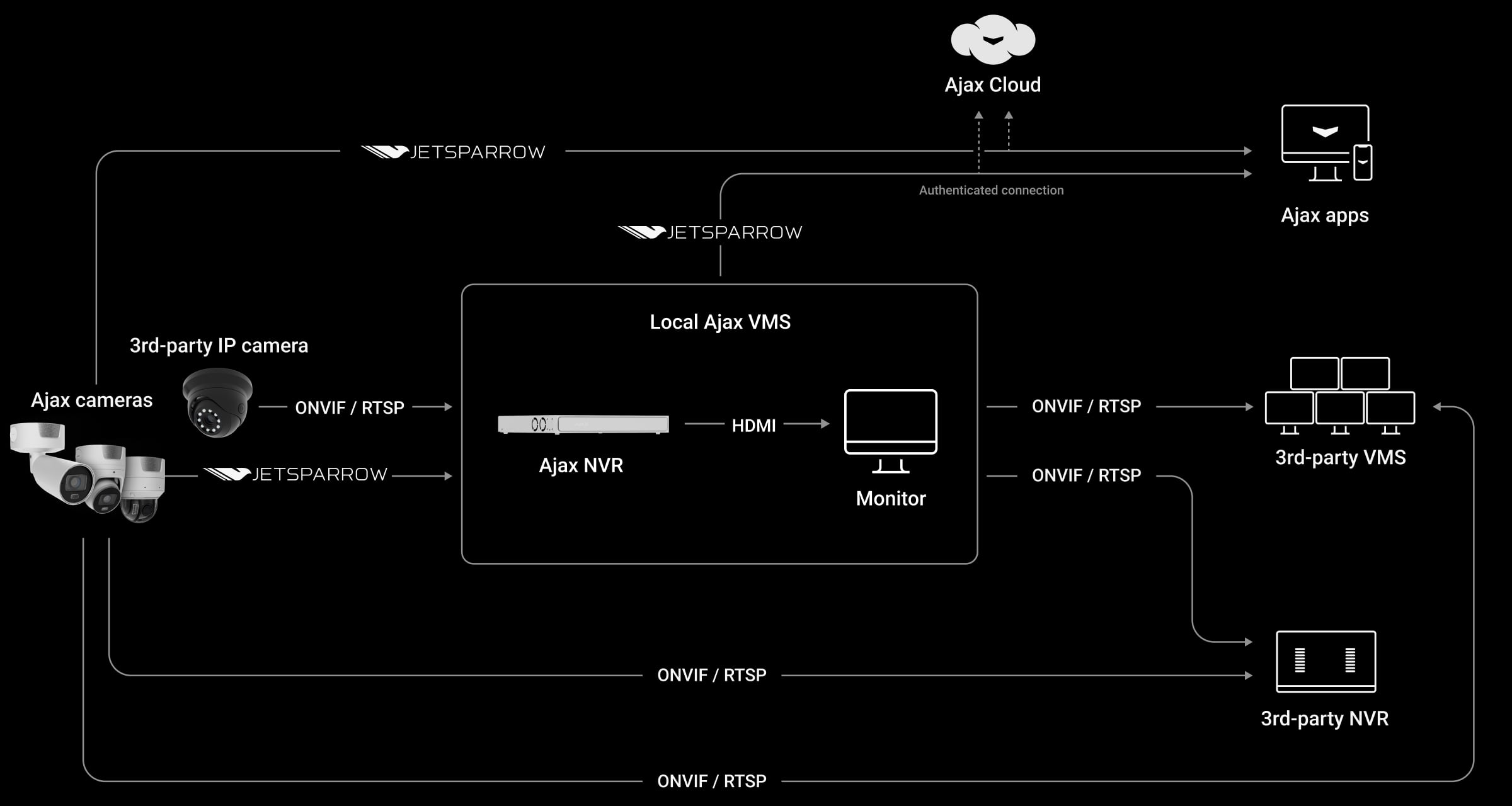
Ajax cameras, ONVIF and RTSP
Connect Ajax video devices and compatible third-party IP cameras. The recorder supports H.264 and H.265 streams and conforms to ONVIF Profiles G and S. Use Ajax apps to discover cameras on the network and configure supported integration.
Confirm the exact camera, firmware, resolution and stream settings. A supported video stream does not guarantee every manufacturer-specific control or analytic event.
Add recognition to existing cameras.
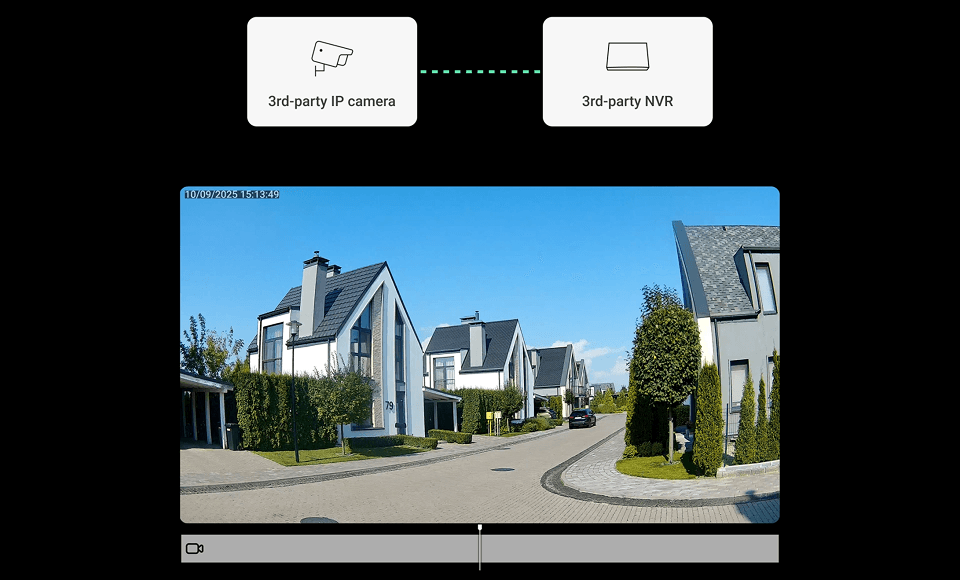
People, pets, vehicles and line crossing
Onboard AI can analyse compatible third-party camera streams. The 8-channel versions support analytics on up to 8 channels; the 16- and 32-channel versions support up to 12.
Enabling Object detection for even one third-party camera reduces decoding capacity: for example, the listed 4K/25 fps capacity changes from four streams to two. Check the full limits and actual resource use before configuring the video wall.
A viewing station at the site.

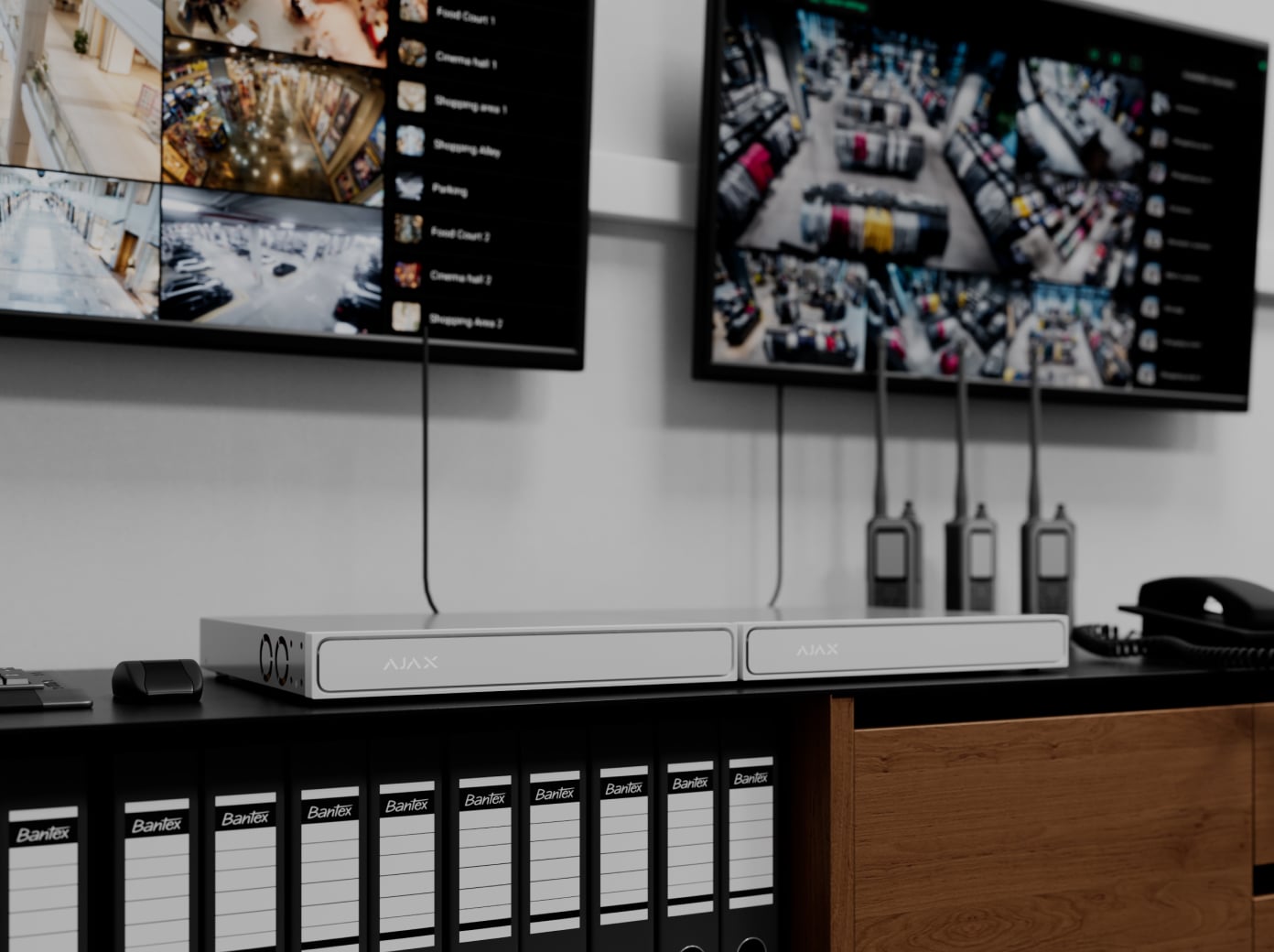
Local HDMI viewing
Connect a display through 4K HDMI and use the USB ports for a mouse, keyboard or suitable storage. A display and peripherals are separate purchases.
Internet access is needed for setup. Ajax states that cameras added through the recorder must connect to Ajax Cloud at least once every 30 days for continued offline operation.
Keep the whole site in view.
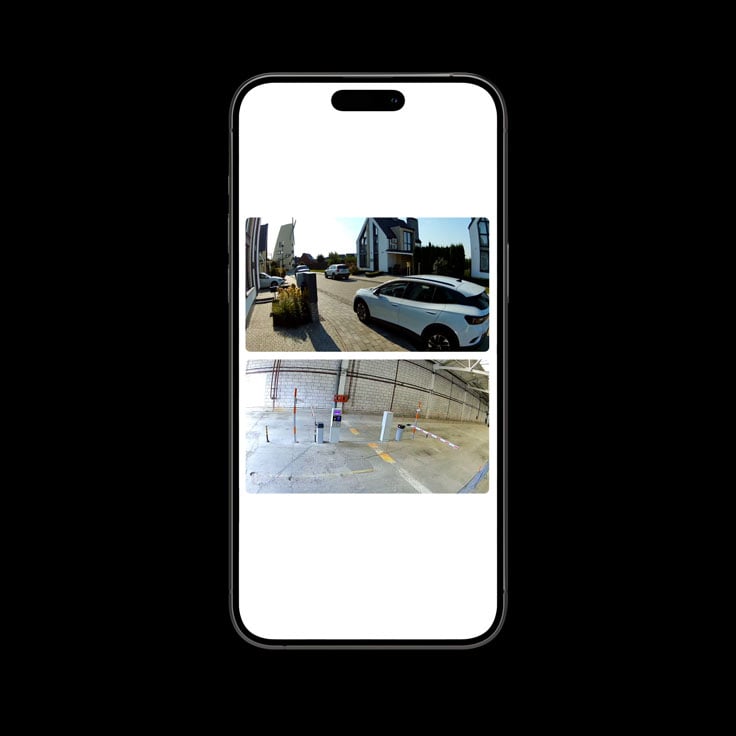
Your cameras, together
Arrange live camera views in a video wall and change their order as your priorities change. Use Ajax apps on a phone, computer or supported TV to check several viewpoints without opening each camera separately.
Find the moment. Keep the evidence.
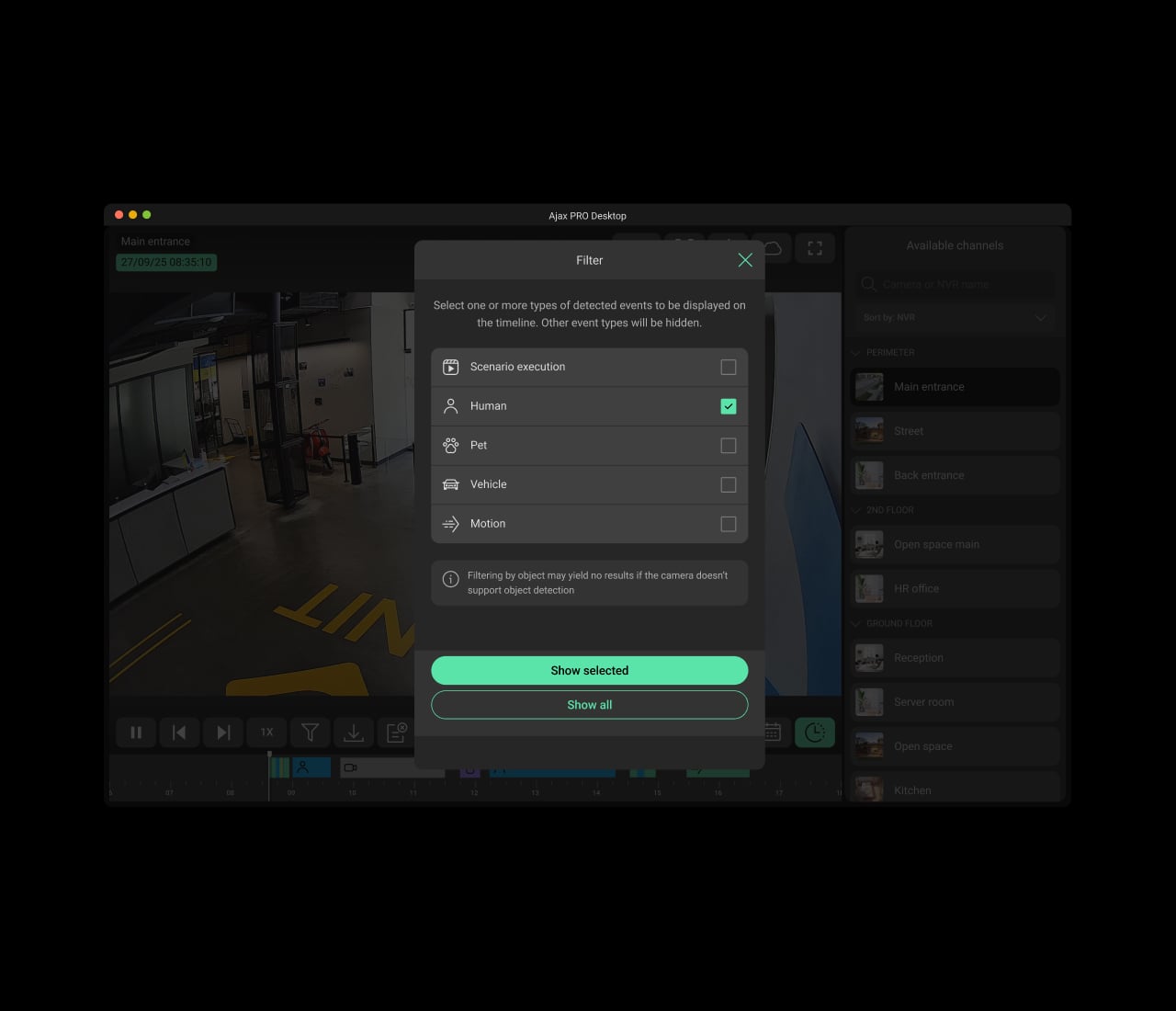
Find the relevant event
Filter the recorded event history and open the corresponding footage. Available object-type filters depend on supported camera or recorder analytics.
Give the archive room to grow.
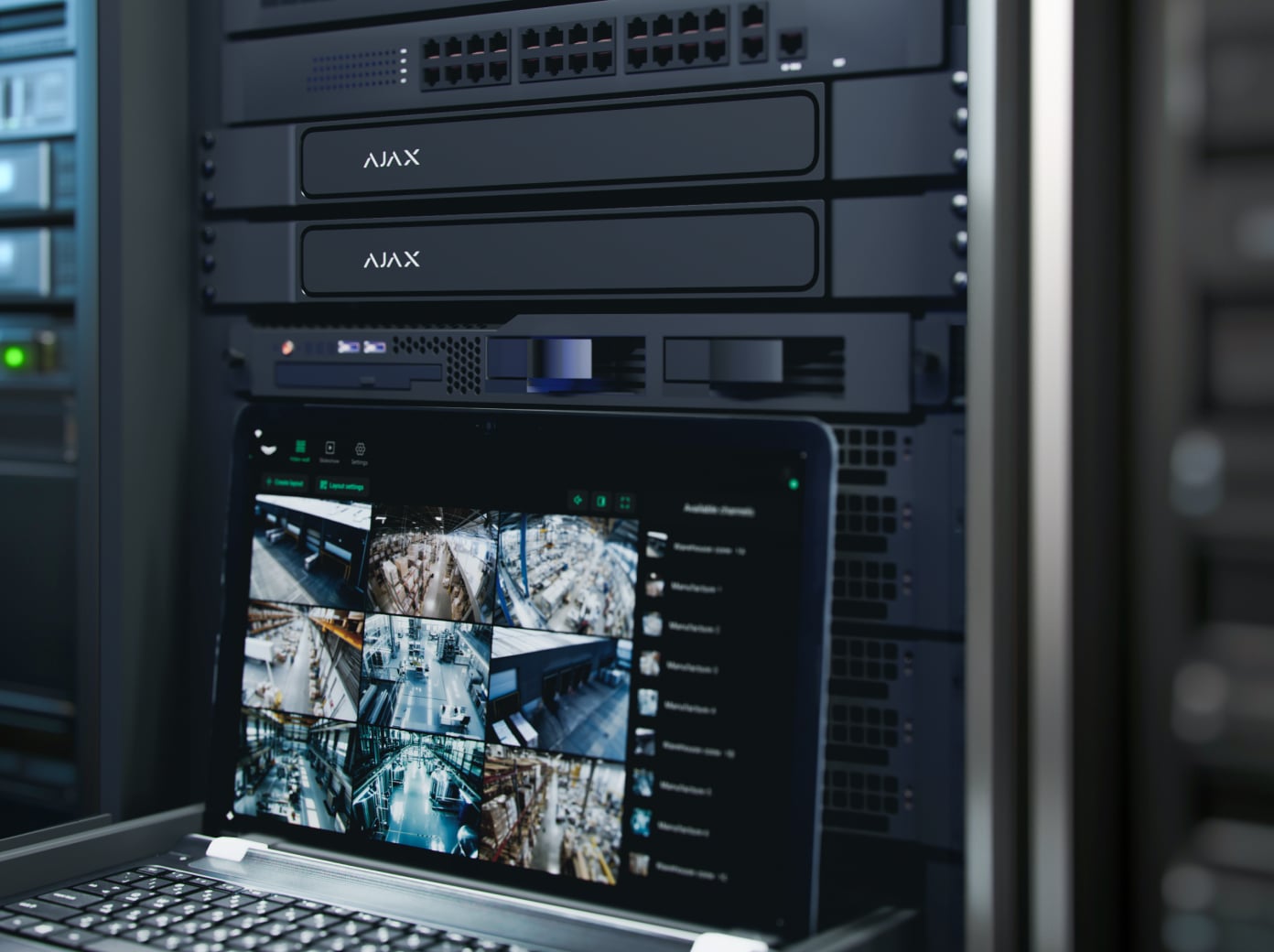
Two SATA drive bays
Install up to two compatible 2.5- or 3.5-inch HDDs or SSDs. Exact specifications rate each drive up to 24 TB. Drives are separate purchases; plan capacity for bitrate, recording hours and the retention period you need.
The usable archive depends on recording mode. Redundancy uses a second copy and does not double retention; formatting a reused disk deletes its existing data.
Two drives. Two ways to record.
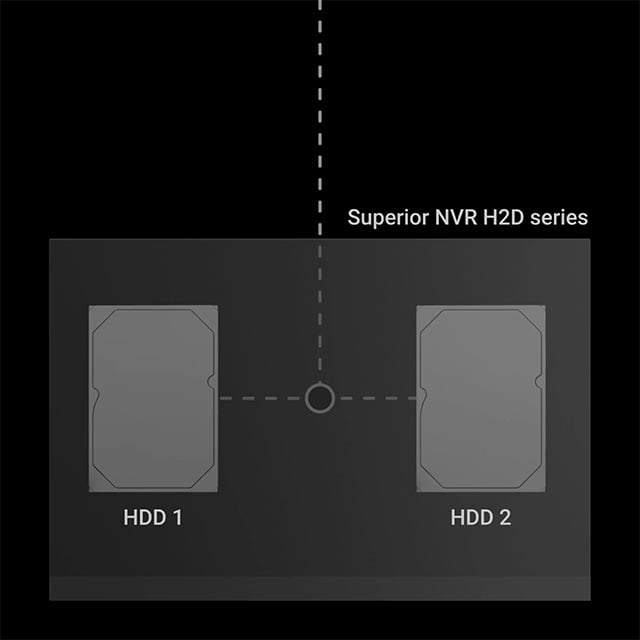
Keep a second copy
Redundancy mode writes the same video streams to both installed drives. Use matching capacities: available recording depth is limited by the smaller drive.
Two local copies do not protect against theft of the recorder, fire or loss of the whole system. Export important evidence separately.
Service a drive without shutting down.
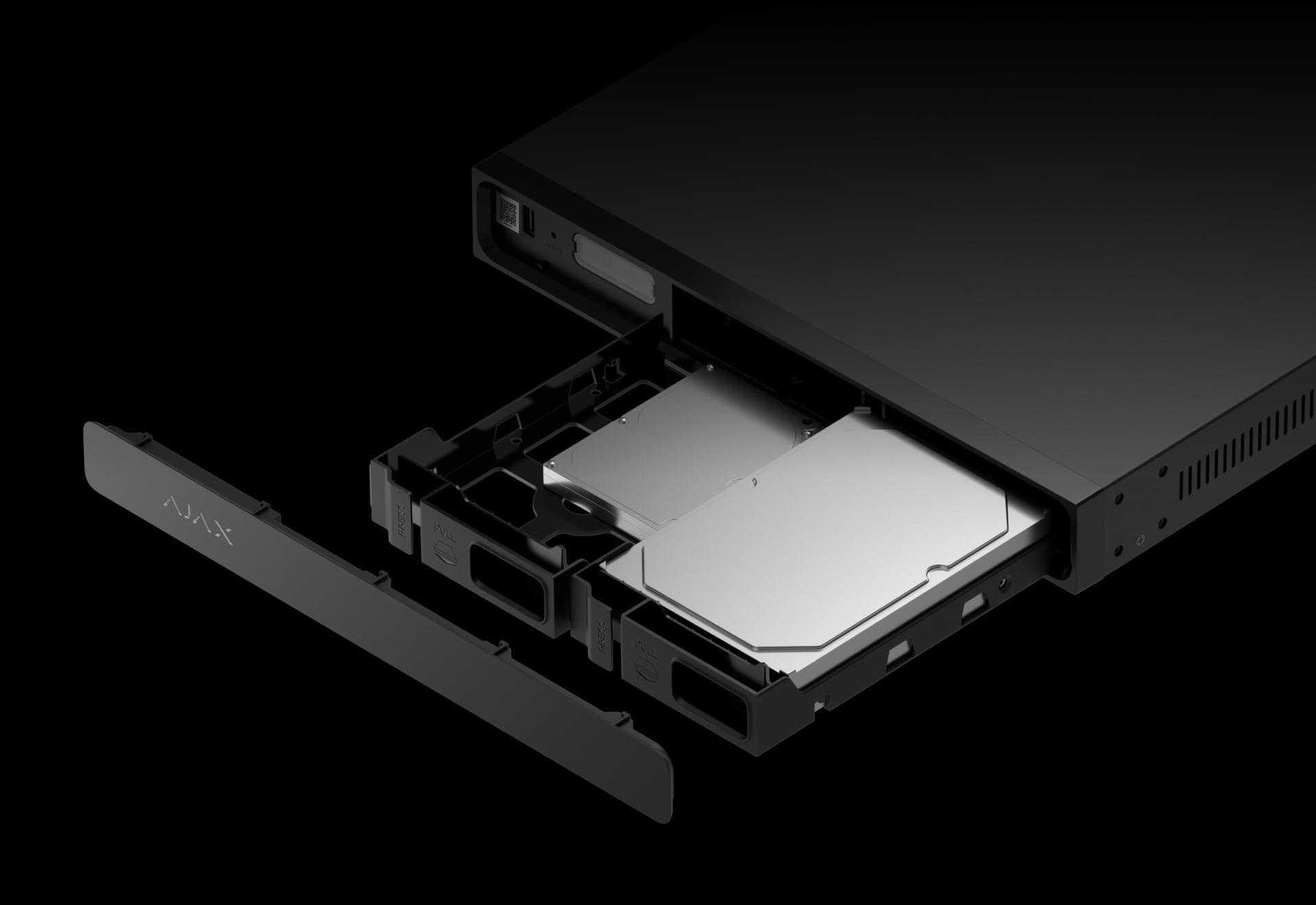
Hot-swappable drive trays
The two drive trays support replacement while the recorder remains powered. Secure each compatible SATA drive in its tray and follow the model’s installation procedure. Check drive status and recording after replacement.
A removed or failed drive cannot retain new footage. The remaining archive and continuity depend on the selected recording mode and working drive; hot swapping is not a promise of zero data loss.
Choose the right connections.
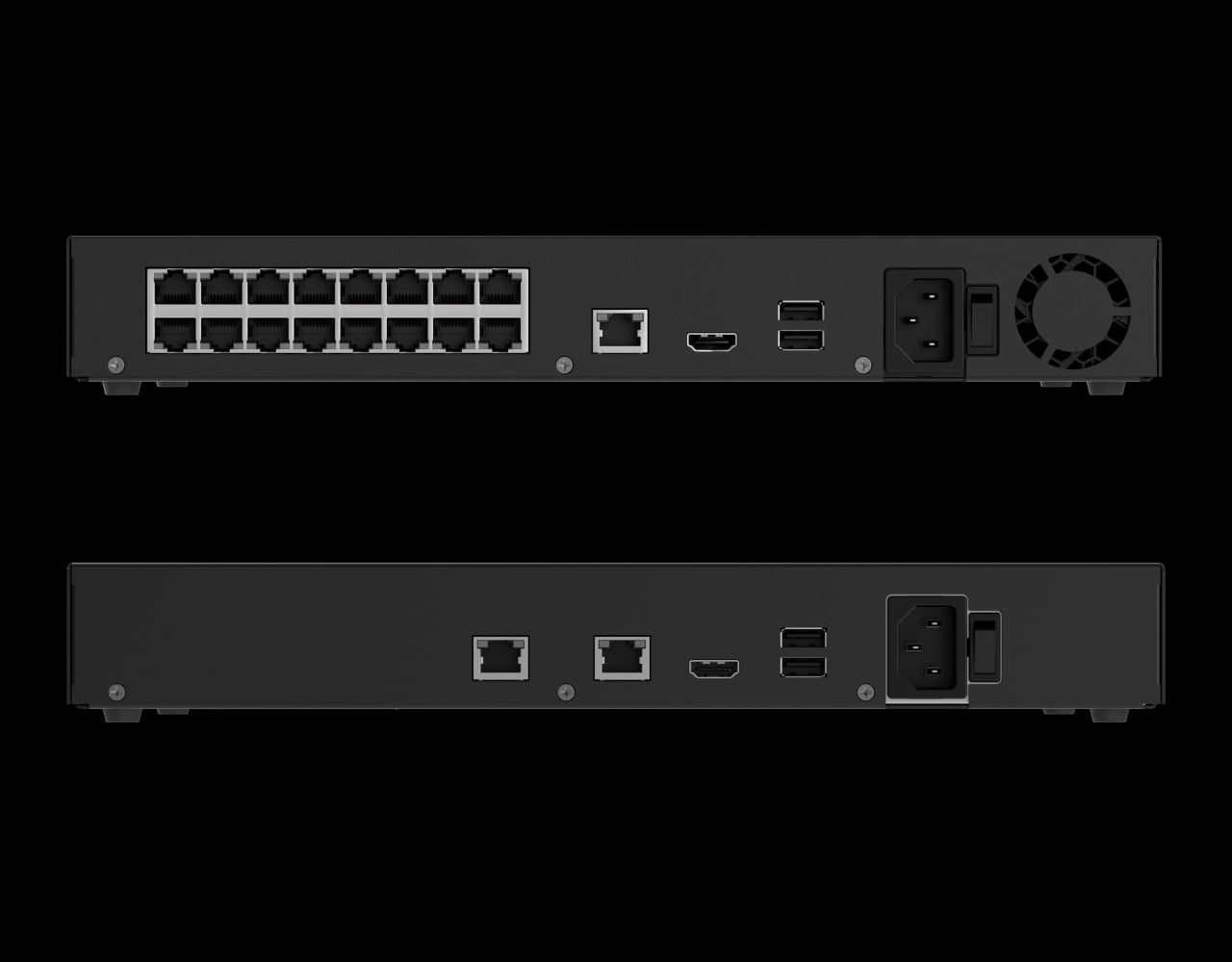
PoE or a separate camera network
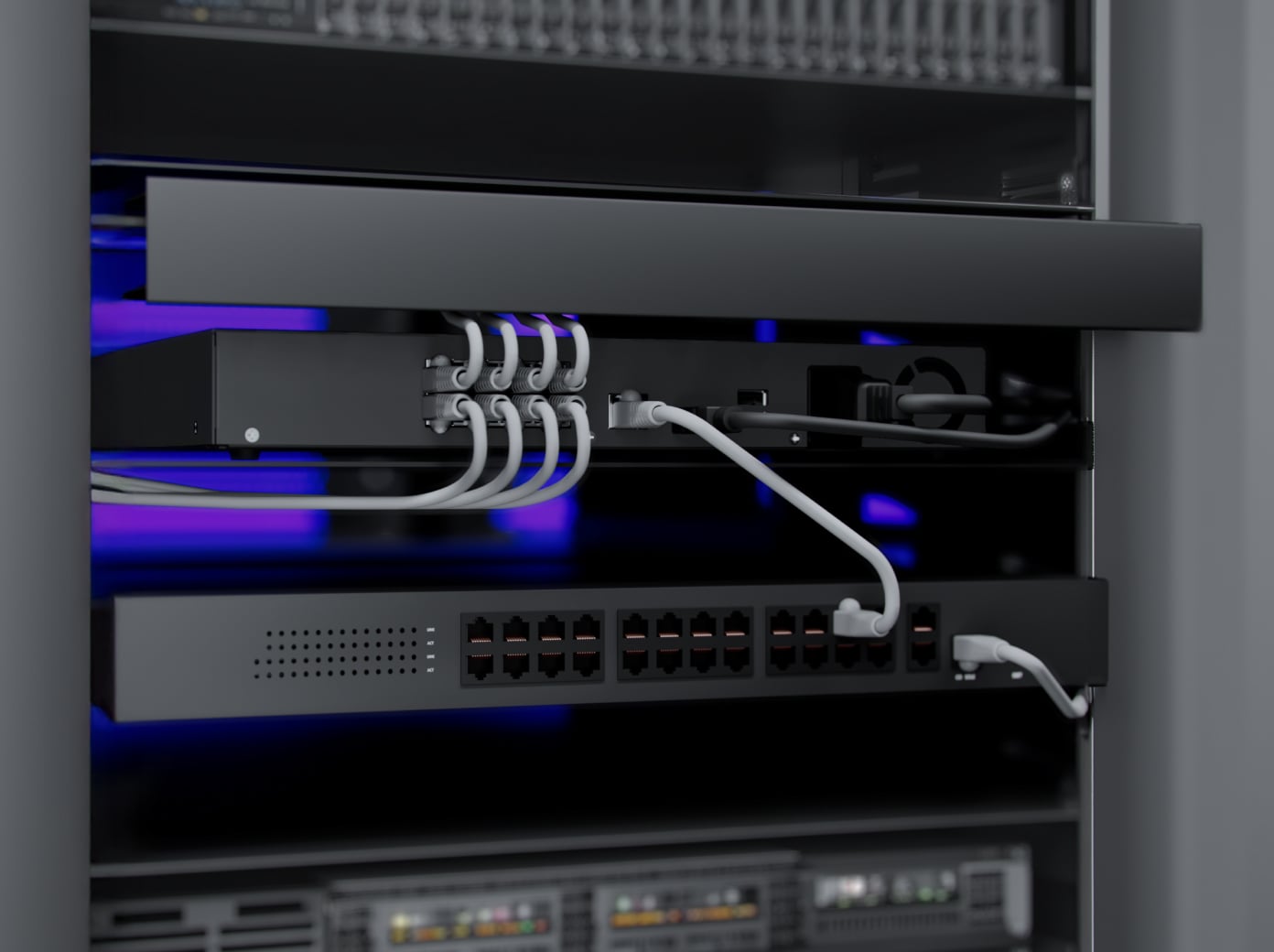
PoE versions have eight or sixteen IEEE 802.3af/at ports, up to 25 W per port and a shared 200 W budget. Non-PoE 2GAC versions have two Gigabit Ethernet interfaces. Channel count, port count and total power must each fit the project.
The source illustration shows a PoE configuration; use the exact selected version for the port layout. Superior has one USB 3.0 and two USB 2.0 ports.
Video that is easy to move through.
JetSparrow
Ajax’s video technology handles streaming and archive access with encrypted peer-to-peer transmission. It helps keep live viewing and timeline navigation responsive; the network connection and recording setup still determine the experience.
Give an alarm visual context.
A camera adds video to a security system. Detector-triggered scenarios also require the corresponding Ajax intrusion devices and a compatible hub.
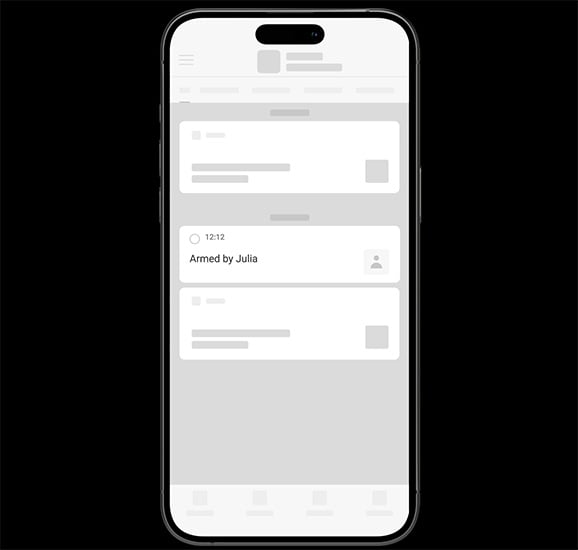
From notification to footage
Link a camera to the area it watches. A system event can take you to the relevant video so you can understand what happened at the property.
Record the movement that matters.
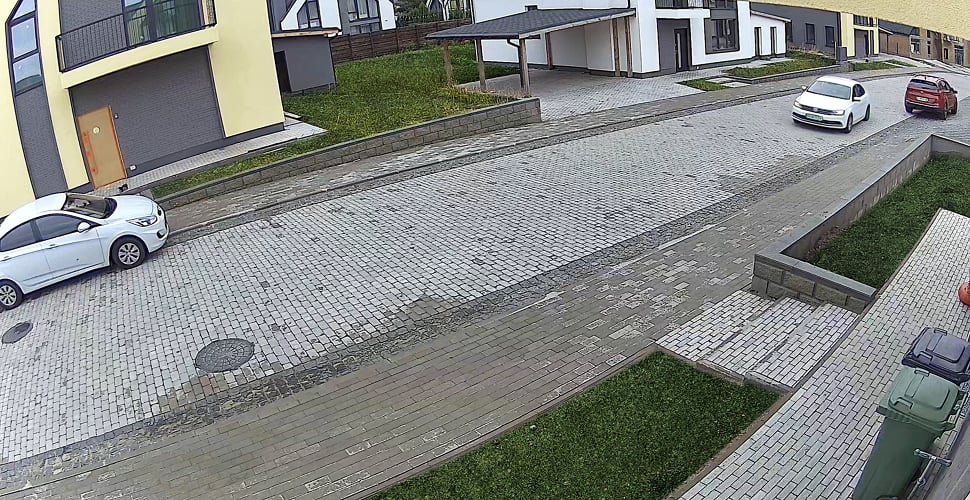
Choose detection zones
Set image areas where movement should trigger recording and adjust sensitivity. The recorder can analyse motion in the frame or use supported camera algorithms. This helps narrow the event history and manage storage.
Pixel motion detection is distinct from recognising people, pets or vehicles. AI depends on the camera or a supported Superior recorder and its processing limits.
Decide who can see and manage video.
Separate access for each role
Manage live view, recordings, audio and device settings for users, installers and monitoring operators. Grant PRO access only for the time and work required, then revoke it when the work is complete.
Protect the account and archive
Use two-factor authentication and review active sessions. Monitor drive status in Ajax apps and investigate storage errors promptly. Keep firmware current and verify playback and exports during maintenance.
Provide power for the whole system.
Power matched to the chosen version
H2D and Superior H2D use a 100–240 V AC mains supply. PoE models also power compatible connected cameras within their per-port and total budgets. The CR2032 cell maintains the clock only; it does not back up recording.
For continued operation during an outage, plan suitable backup power for the recorder, cameras and network equipment. Runtime depends on that equipment and its load.
Install, test and maintain.
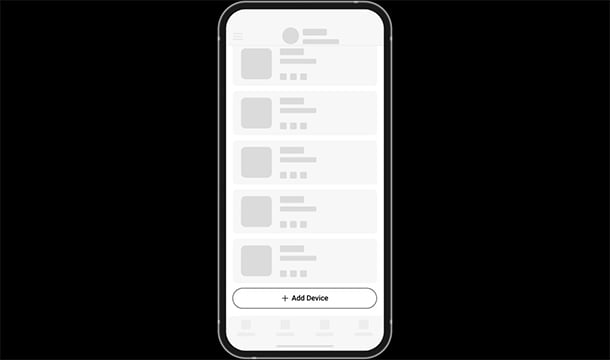
Add and connect
Scan the recorder’s QR code in an Ajax app, select a space and room, then connect the required cameras. A hub is optional for standalone video; detector-triggered video scenarios need the corresponding detectors and compatible hub.
Find the right recorder.
Compare recording capacity, camera power and local viewing. Choose the exact version for your installation.
Compare recorders →Every detail, in one place.
Video
- Video input
- 8 channels
- Recording resolution
- 12 MP, 8 MP, 6 MP, 5 MP, 4 MP, 3 MP, 1080p, UXGA, 720p, VGA, 4CIF, DCIF, 2CIF, CIF, QCIF
- HDMI output resolution
- 3840 × 2160, 1920 × 1080, 1280 × 1024, 1280 × 720 px
- Live view / playback resolution
- 12 MP, 8 MP, 6 MP, 5 MP, 4 MP, 3 MP, 1080p, 720p, D1, VGA, CIF
Decoding
- Format
- H.265, H.264, JetSparrow
- Capability when Object detection is disabled
- 2 × channel at 4096 × 4096 px (25 fps); 4 × channel at 3840 × 2160 px (25 fps); 8 × channel at 2880 × 1620 px (25 fps) These values apply when Object detection is disabled for all third-party video devices connected to the Ajax NVR.
- Capability when Object detection is enabled
- 1 × channel at 4096 × 4096 px (25 fps); 2 × channel at 3840 × 2160 px (25 fps); 4 × channel at 2880 × 1620 px (25 fps); 5 × channel at 2560 × 1440 px (25 fps) These values apply when Object detection is enabled for at least one third-party video device connected to the Ajax NVR. The actual number of displayed channels may vary depending on NVR resource usage.
- Live view window division
- templates: 1, 4, 9, 16, 25, 5+1, 7+1, 12+1 views custom: up to 10×10 views
- Synchronous playback
- 4 channels
Intelligent video analytics
- Motion detection
- Ajax camera: 8 channels Ajax NVR: 8 channels Ajax NVR features built-in software to detect movement in the frame. It is possible to switch between image analysis by Ajax NVR or camera algorithms in an Ajax app.
- AI-powered object detection
- People Pets Vehicles Line crossing
- AI analytics on third-party cameras
- up to 8 channels
Interface
- HDD/SSD
- 2 × SATA III: supports drives with up to 24 TB capacity (2.5" and 3.5" form factors) Supports full hot-swap functionality. HDDs or SSDs are not included.
- Network
- 1 × RJ-45 self-adaptive Ethernet (10/100/1000 Mbps) + 802.3af/at PoE RJ-45 fast Ethernet (10/100 Mbps)
- USB
- rear panel: 2 × USB 2.0 (Type-A) For connecting a keyboard, mouse, or USB Audio Device Class devices (Audio IN/Audio OUT). front panel: 1 × USB 3.0 (Type-A) To connect a USB flash drive.
PoE standard
- PoE port
- 8 × IEEE 802.3af/at (Alternative A, power over data pairs)
- Maximum power per port
- up to 25 W
- Total power budget
- up to 200 W
Network
- Bandwidth
- incoming: up to 384 Mbps outgoing: up to 384 Mbps
- Protocol
- HTTP, HTTPS, TCP/IP, IPv4, IPv6, UPnP, RTSP, UDP, DHCP, DNS, DDNS
- ONVIF®
- conformant with ONVIF® Profile G and S The device implements ONVIF® H.265 (HEVC) encoding, transmission of motion detection and AI recognition events, control over Wide Dynamic Range (WDR), and other image settings — not ONVIF® profile or add-on conformant.
Key features
- Supported devices
- Ajax cameras; IP cameras that conform to ONVIF® Profiles; RTSP
- Redundancy mode
- Simultaneous recording of the same video streams to two storage devices to ensure data redundancy and reliability.
- Split mode
- Sequentially distributes video streams across multiple storage devices to balance the load and optimize storage.
- Built-in video management system
- Integrated video wall interface with live camera feeds.; Smart event filters for quick access to relevant video recordings.; Interactive timeline with preview navigation for efficient playback and incident review.
- Visual verification of Ajax system alarms
- Ajax NVR supports a scenario in which events triggered by Ajax detectors automatically highlight the corresponding camera feed on the video wall. This allows an operator to immediately verify the intrusion.
- Privacy
- Advanced privacy controls ensure a high level of personal data protection. All access rights — including those for mobile app users, installers, and monitoring company operators via Ajax PRO Desktop — are fully configurable by the device owner. This guarantees that only authorized persons can access video streams, event history, or device settings in accordance with the owner's preferences.
- Accelerometer
- alarm when Ajax NVR is moved
Power supply
- Main
- 100–240 V, 50/60 Hz, 5 A
- Power consumption
- up to 280 W
- Clock battery
- CR2032 battery, 3 V Only to power the system clock.
Enclosure
- Dimensions
- 330 × 330 × 44 mm
- Weight
- 3.3 kg Without drives.
- Operating temperature range
- from 0 °C to +50 °C
- Operating humidity
- up to 75%
- Protection class
- IP20
What’s in the box
- Ajax Superior NVR H2DAI8PAC (8-ch)
- 2 × rack-mount brackets
- Power cable
- Ethernet cable
- Installation kit
- Quick start guide
For your installation
- Compatible Ajax cameras and supported ONVIF/RTSP camera streams.
- Choose the recorder version by channel count and actual PoE ports; those are separate numbers.
- Storage drives are sold separately. Select suitable surveillance storage and calculate retention.
- The internal clock battery does not keep the recorder running during a power outage.
- Indoor installation; confirm regional supply and the power configuration before ordering.
Optional additions
Product documents.
Find the right protection.
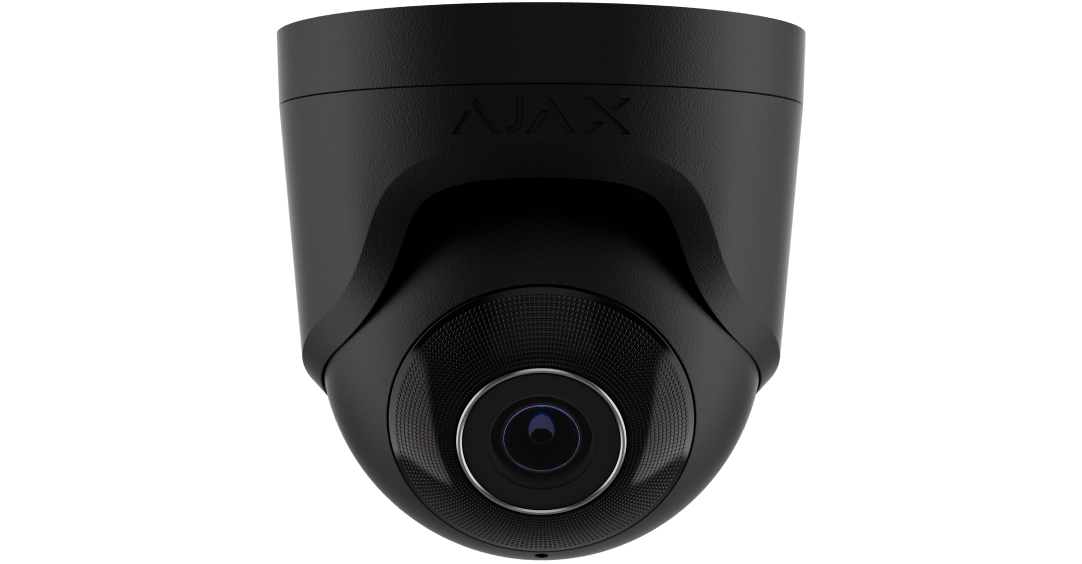
TurretCam
Explore compatible Ajax cameras and choose the view each location needs.
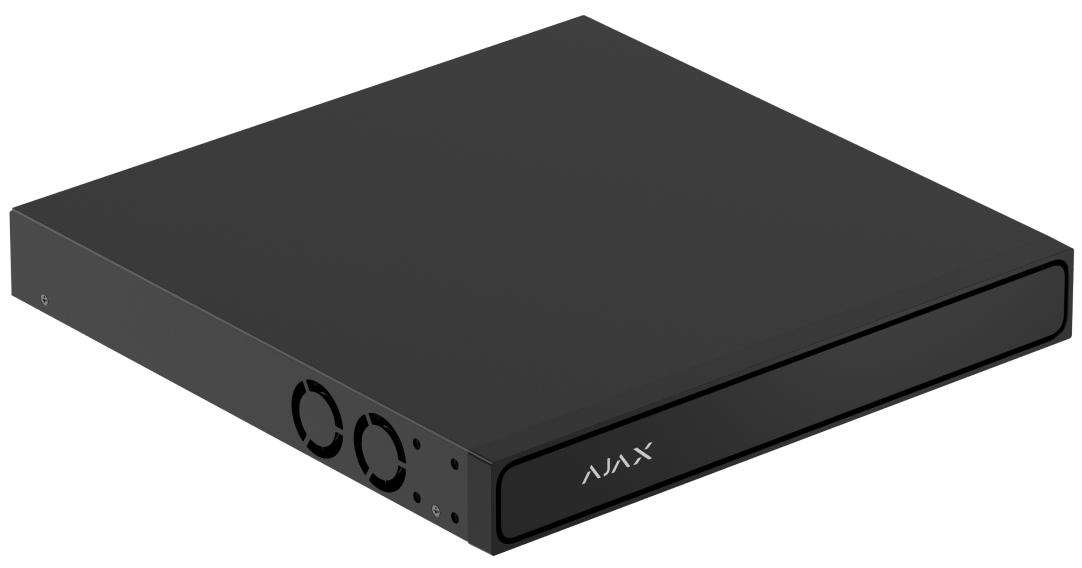
NVR H2D
Check the channels, storage and connections that fit your installation.